

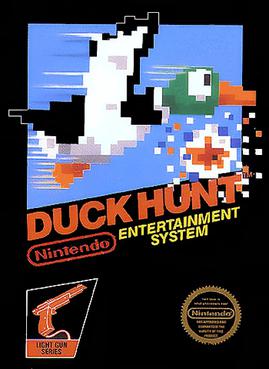
Duck Hunt didn’t teach you to shoot. It taught you to miss, and then it laughed at you for it. That gray plastic dog popped up after every failed round, held two ducks by the neck, and grinned like he’d been waiting all day for the chance. For a lot of NES kids in the fall of 1985, that laugh is the single most memorable sound the console ever produced — more than the Mario coin ping, more than the Zelda item jingle.
Nintendo built Duck Hunt around a light gun, and that alone made it feel like nothing else on store shelves. The game actually started in Japan back in April 1984, as an arcade cabinet running on the Nintendo VS. System and a Famicom cartridge. It didn’t reach American living rooms until October 1985, when it launched alongside the NES itself and the orange NES Zapper — one of the earliest examples of Nintendo treating a peripheral as part of the core pitch rather than an accessory. Point the gun at a CRT, pull the trigger, and the console reads the flash of white the screen produces at that exact instant. It’s a clever trick. It’s also a fragile one. Modern flat-panel TVs refresh too fast for the gun to catch, which is why Duck Hunt is one of the only NES games you basically cannot play the original way anymore.
The rules were simple by design. Round one sends a single duck. Switch to Game B and round two sends two at once, and missing either bird ends your turn early. Every third round swaps the ducks for clay pigeons launched by an unseen shooter — no dog required, and honestly a little less fun for it. Nintendo sold this as a pack-in and a standalone cartridge for years, and the strategy worked. Worldwide sales landed north of 28 million copies, making it one of the best-selling light gun games ever released on any platform.
None of that explains why the dog is what people actually remember. He has no name in the game itself and no dialogue beyond that laugh. Still, he ended up on more than one “most punchable video game character” list decades later. Series creator Masahiro Sakurai later said Duck Hunt’s commercial weight was a real factor in giving the dog and his ducks their own fighter slot in Super Smash Bros. for Wii U and 3DS — a strange kind of immortality for a character whose entire personality is contempt for the player.
Duck Hunt also holds a specific spot in NES collecting circles, because it shipped as one of the original NES Black Box titles — the plain black-bordered cartridge art Nintendo used for its earliest 1985–86 U.S. lineup before switching to the gray box design. We covered the full run in our ranking of the ten best Black Box games, and Duck Hunt’s mix of huge print numbers with genuine variant hunting (early cardboard packaging, different Zapper bundle configurations) keeps it a reliable entry point for new collectors. A loose cartridge won’t break the bank. A complete-in-box copy with the correct-era Zapper still draws real attention once it crosses into graded territory.
Duck Hunt never asked to be complicated. Aim, shoot, get mocked, try again. That’s the whole game, and it’s exactly why it stuck around long enough to outlive the technology it was built for.