

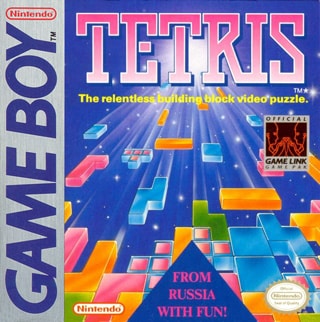
Nintendo of America had a plan for what would ship inside every Game Boy box in the summer of 1989, and it wasn’t a puzzle game about falling blocks. Super Mario Land was built, tested, and ready to go as the pack-in title. Then a game designer named Henk Rogers walked into Minoru Arakawa’s office with a different idea, and the plan changed.
Rogers ran a small publisher called Bullet-Proof Software, and he’d become obsessed with a Soviet puzzle game called Tetris. His pitch to Arakawa, Nintendo of America’s president, was blunt. Mario would sell the Game Boy to kids who already wanted a Nintendo. Tetris would sell it to their parents and grandparents too — everyone else standing in line behind them. Arakawa agreed. Nintendo pulled Super Mario Land out of the box and put Tetris in instead, a swap that shipped with every North American and European Game Boy from launch day, July 31, 1989, at $89.95 a unit.
Getting Tetris into that box took more than a good pitch. The rights were a mess. Alexey Pajitnov built the game on a Soviet government computer in 1984, so ownership technically ran through a state export agency called ELORG. A British broker named Robert Stein had licensed what he believed were the computer rights years earlier, and those rights got resold and re-licensed through Spectrum HoloByte and the Mirrorsoft/Atari Games chain until almost nobody was sure who owned what anymore. Rogers flew to Moscow to sort it out in person, and arrived around the same time as Kevin Maxwell, a Mirrorsoft executive chasing the identical handheld rights. Two men, two companies, one license, one building. The deal reportedly came down to paperwork — a fax meant for Maxwell never reached him in time. Rogers walked out with the handheld rights. Arakawa and Nintendo of America vice president Howard Lincoln locked down the console rights that same March, and by summer, Tetris belonged to Nintendo everywhere it counted.
The bet paid off fast. Nintendo moved roughly 40,000 Game Boys on release day alone. A million more sold within weeks. By early 1990, the count hit 2.5 million. Worldwide sales of the Game Boy version eventually cleared 35 million copies, a number a Mario platformer aimed mostly at kids almost certainly wouldn’t have touched. Pajitnov himself has called it his favorite version) of the game he invented — the cartridge was also the first release compatible with Nintendo’s two-player Game Link Cable, turning a solitary puzzle into something you passed around a lunch table.
None of that history shows up on the cartridge itself. It’s a plain gray label on a plain gray shell, holding a game most collectors already owned several times over on other systems. That’s exactly why complete, well-preserved launch copies matter to the people who track this stuff. Tetris isn’t rare. But that specific cartridge is the reason the Game Boy had a real shot against Sega and Atari’s flashier handhelds in 1989, and a worn loose copy tells a very different story than a first-run cartridge with its box, manual, and Link Cable insert still intact. Grading exists to put a number on exactly how much of that story survived the last thirty-plus years.
It’s also a reminder that not every landmark Game Boy release started out as a sure thing. The console’s other big swing, Samus’s redesign for the handheld in Metroid II, came years later carrying its own set of decisions nobody saw coming either.