

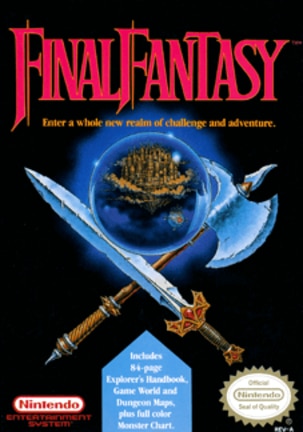
In 1987, a small Tokyo developer called Square was running out of money. Its earlier games hadn’t sold. Staff were bracing for the company to fold within the year. So when director Hironobu Sakaguchi got the green light to build one more role-playing game, everyone involved understood the stakes. That game was Final Fantasy. It didn’t just keep Square afloat. It launched the longest-running franchise in console gaming.
Sakaguchi wanted to build something in the mold of Ultima and Wizardry, filtered through Dungeons & Dragons. Square wasn’t sold on the RPG genre at all until a rival studio, Enix, proved it could actually move units with Dragon Quest a year earlier. That success is the only reason Final Fantasy got made.
The title carries its own urban legend. Collectors and message boards have repeated for decades that “Final” referred to Square’s last-ditch gamble, one more shot before the doors closed for good. Sakaguchi has pushed back on that story more than once, saying the team mainly wanted a name that abbreviated cleanly to “FF” in both English and Japanese. The working title was actually Fighting Fantasy, dropped after it collided with an existing British gamebook series of the same name. The real reasoning is mundane. The timing, though, lined up too well for the myth to ever fully die.
Once you’re in the game, four hand-picked heroes known as the Warriors of Light set out to restore four elemental crystals, each darkened by an Elemental Fiend. Players build their party from six classes: Fighter, Thief, Black Belt, Red Mage, White Mage, and Black Mage. Combat runs through simple menus, one command at a time, but the systems carried real depth for 1987 — classes could later upgrade into stronger forms, and gear choices mattered as much as raw levels.
Japan got the game first, in December 1987, where the original Famicom release sold roughly 520,000 copies. North America waited nearly three years, until Square finally brought the NES version over on July 12, 1990. It sold well enough here on its own — around 700,000 copies — that combined sales passed 1.3 million by 1994, a serious number for a genre most American publishers still considered a hard sell.
That NES cartridge is also worth knowing about if you’re chasing a copy today. It runs on a battery-backed save chip, the same SRAM approach The Legend of Zelda had brought to the console a few years before. On a cartridge pushing 36 years old, that battery is a wear part like any other. A dead cell or corroded contact can quietly erase a save file without touching the label or the box art at all. When a Final Fantasy cartridge comes in for grading, board condition matters just as much as what the outside looks like.
Reception at launch leaned genuinely positive. Critics singled out the class variety and the sheer scale of the world next to most other 8-bit competition. The grinding got called out too — plenty of random encounters stood between players and the next crystal, and few reviewers pretended otherwise. None of it stopped Final Fantasy from becoming a defining NES role-playing game, one that gave Square the breathing room to keep making sequels for decades to come.
For a game built as a last resort, Final Fantasy aged into something closer to a founding document. Anyone holding an original cartridge today is holding a small piece of that story: a company that bet everything on one 8-bit adventure, and won.