

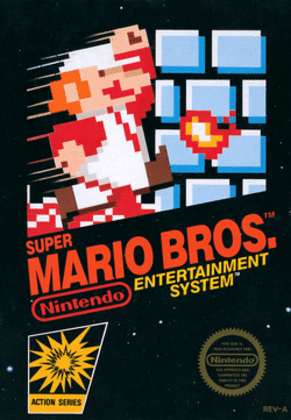
A sealed copy of Super Mario Bros. sold for three million dollars in June 2026. Not at a boutique collectibles show, either — at Heritage Auctions, the same house that moves fine art and rare coins. The winning bid landed on a cartridge most people would have paid six dollars for at a garage sale in 1990.
This wasn’t a random shrinkwrapped copy from some Nintendo warehouse overstock. It was sealed with a gloss sticker rather than shrink wrap, tying it to one of the earliest production runs Nintendo ever shipped for the NES. Only three examples of that specific sticker-seal variant are confirmed to exist, and this was the first one to ever hit a public auction block. PSA graded it 9.6, with an A++ on the seal itself — about as close to untouched as a 40-year-old piece of cardboard gets.
Context helps here. The previous Super Mario Bros. auction record sat around $660,000, set back in 2021. A gold Nintendo World Championships cartridge — one of the rarest promotional items in gaming — brought $207,400 in 2024. Three million dollars for a game that sold in the millions at retail says less about scarcity of the title and more about scarcity of condition. Anyone can find a loose Super Mario Bros. cart. Almost nobody has one that’s never been touched.
So what actually separates a $3 million grade from a $30 one? Box condition does a lot of the work. Graders look hard at corners — are they sharp or rounded, crushed or clean — along with warping, discoloration, and any hint of water damage or mold. Color breakage, the fading and cracking that shows up along fold lines after decades of handling, knocks a score down fast. UV exposure is its own quiet killer: a box that’s spent years near a sunny window rarely scores above an 8, no matter how clean it looks otherwise, because that fading is permanent.
The seal gets graded on its own scale entirely, separate from the box — tears, tightness, scuffing, how well it’s held its seam. It’s the first line of defense for everything underneath, and a cracked or lifted seal drags the whole package down even if the box itself looks fine.
Loose cartridges get judged differently, but the same instinct applies: label centering, corner wear on the end labels, whether the shell’s gone yellow or picked up scratches. None of it is guesswork. It’s the same kind of close, consistent inspection that separates a good eBay listing photo from an actual verified grade — which is exactly the gap a real grading service exists to close. If you’ve ever wondered how the major graders stack up against each other on box and seal calls, our breakdown of how we compare to WATA walks through it in more detail.
None of this means every NES collection is sitting on a hidden fortune. Most loose, well-loved carts are worth what they’ve always been worth — a few dollars, a lot of memories. But the gap between “sealed and mint” and “played hard for a decade” has never been wider, and a $3 million cartridge is a pretty loud reminder of why condition, not just the game itself, is what collectors are really paying for. If you’re curious what actually happens during a real grading pass, our how-it-works page breaks down the process step by step.