

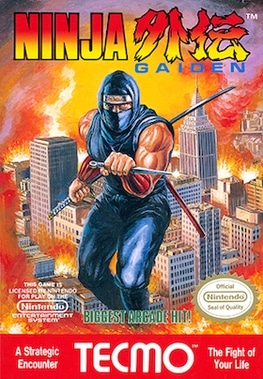
Picture 1989. You rent Ninja Gaiden from the video store expecting a straightforward ninja brawler, the kind of thing the arcade original already gave you. Then the cartridge boots up and the screen doesn’t show a title card and a blinking “PRESS START.” It shows a story. Ryu Hayabusa, sword slung across his back, reading a letter about his murdered father, drawn like a Saturday morning cartoon. You haven’t touched the controller yet, and the game has already done something no NES cartridge had really pulled off before.
That opening scene was the first taste of what Tecmo called “Tecmo Theater,” a set of anime-style cutscenes stitched between the game’s six acts that added up to more than 20 minutes of story on hardware that had no business affording the memory for it. Released in North America in March 1989, Ninja Gaiden wasn’t just another side-scroller riding the ninja craze of the late ’80s. It was the first NES title to treat narrative as part of the pitch instead of an afterthought buried in the instruction manual.
Strip away the cinematics and there’s still a sharp action game underneath. Ryu’s default weapon is the Dragon Sword, and his sub-weapons, things like shurikens and fireballs, burn through a “spiritual strength” meter instead of ammo, forcing players to ration rather than hoard. He climbs walls and springs between ledges, and the whole thing moves with an animation style that trades smoothness for speed. That tradeoff made Ninja Gaiden feel faster and meaner than most of what else was on shelves that year.
The response was immediate. Electronic Gaming Monthly ranked it #1 on its Top Ten list for four straight months in 1989 and later named it Best NES Game of the Year. Nintendo Power handed it Best Challenge and Best Ending at its own 1989 awards. Tecmo USA’s Dimitri Criona said retailers kept placing repeat orders in batches of 60,000 cartridges at a time, which isn’t a number you hit with a game nobody wants (per Wikipedia’s account of the game’s release).
Best Challenge wasn’t a polite way of saying “difficult.” Ninja Gaiden earned that award the same way Contra did a year earlier, except worse in one specific, infuriating way: enemies could knock Ryu backward off ledges and straight into bottomless pits. One wrong jump. Game over, no matter how much health he had left. Later generations coined a phrase for exactly this kind of design, “Nintendo Hard,” and Ninja Gaiden gets cited as one of the games that defined it as often as any title on the console.
For collectors, that mix of heavy demand and constant reordering back in 1989 means original pressings still turn up with some regularity, but condition is a different story. Three decades of video-store rentals and basement storage take a toll on box corners and manual pages, and a copy that’s been well cared for looks nothing like one that hasn’t. It’s the kind of cartridge where knowing what actually separates a strong copy from a worn one matters, whether you’re buying, selling, or just curious what you’ve got in a closet. That’s the whole reason grading exists in the first place.
Ninja Gaiden didn’t invent the ninja platformer, and it certainly didn’t invent difficulty. What it did was prove an NES cartridge could tell a story worth watching between the parts that made you want to throw the controller across the room. That pairing, cinematic ambition next to merciless design, is exactly why it’s still remembered decades later instead of filed away with the rest of the ninja games that came and went in 1989.