

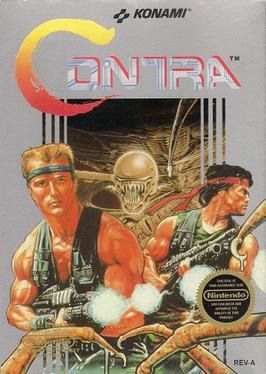
Somebody in your neighborhood knew the code. Up, up, down, down, left, right, left, right, B, A, Start. You didn’t need to be told twice—you wrote it on your hand, taped it inside a Trapper Keeper, or just had it memorized before you’d ever touched the cartridge. Contra made that code famous, and it made a merciless jungle shooter playable for kids who otherwise would’ve rage-quit by the second screen.
Konami’s Contra hit arcades in February 1987 as a two-player run-and-gun with a clear debt to action movies of the era—think Rambo and Predator filtered through sprite art and a machine gun sound effect that never got old. The arcade cabinet was a hit, landing among the highest-grossing dedicated arcade games in the U.S. that year. Konami then built a home version for the Nintendo Entertainment System, released February 12, 1988 in North America, and that’s the version most people actually remember.
The NES port scaled back the graphics but kept the two-player simultaneous co-op intact, which was rare for the system at the time and became the game’s real selling point. Friends huddled on a couch, sharing one screen, gunning through jungle bases and alien hive levels together—that’s the memory Contra left behind more than any individual boss fight. Reviewers at the time singled out the co-op as some of the best on the console, and the run-and-gun genre owes a lot of its NES footing to this cartridge.
Here’s the part everyone actually remembers, though. The Konami Code wasn’t invented for Contra. Programmer Kazuhisa Hashimoto built it into Gradius first, as a shortcut so he could playtest his own brutally hard game without dying constantly, and he simply forgot to strip it out before release. It resurfaced in Contra, where entering it at the title screen turned three lives into thirty, and Nintendo Power printed it in its very first issue under a “Classified Information” column—details covered in more depth on Wikipedia’s rundown of the code’s history. That single code outlived the console, the company’s marketing department, and arguably the game itself—it’s shown up in websites, apps, and jokes for decades since, usually with no connection to Konami at all.
Contra earns its reputation honestly. It’s hard in the fair way, not the cheap way—patterns you can learn, bosses you can beat once you’ve died enough times to know the tell. That’s a different kind of difficulty than a lot of NES titles lean on, and it’s part of why the game held up as a genre touchstone instead of fading into “remember how unfair that was” nostalgia.
Collectors chase Contra carts for a reason beyond nostalgia, too. A game that got passed between friends for years of co-op sessions tends to show it—label wear, scuffed corners, sun-faded cartridges that sat in a rental store bin. Clean, complete copies are out there, but they’re not as common as the game’s popularity might suggest, and that gap between “everyone owned this” and “few kept it mint” is exactly what makes condition matter so much once you start looking seriously at a copy. If you’ve got one sitting in a drawer and you’re curious what real, professional grading would say about its shape, that’s exactly what our grading process is built to answer.
Contra spawned sequels, spin-offs, and a franchise that’s still limping along in some form today, but the original NES cartridge is the one that taught a generation how to cheat their way to thirty lives and still lose anyway. Some games get remembered for their difficulty. Contra gets remembered for the workaround.