

Picture a kid at a Toys R Us in the summer of 1993, standing in front of a shelf that already has Super Mario World and F-Zero on it, and finding a brand-new NES game sitting right next to them. That wasn’t supposed to happen anymore. The Super Nintendo had been out for two years. Most publishers had already moved on. Then Nintendo quietly dropped one of the best-looking, best-playing games the NES ever ran, and it starred a pink ball nobody had seen in color before.
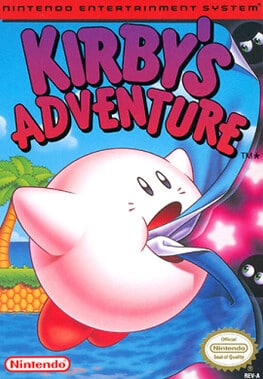
That game was Kirby’s Adventure, developed by HAL Laboratory and published by Nintendo in Japan on March 23, 1993, with a North American release that May. It was the second Kirby game overall, following 1992’s Kirby’s Dream Land on Game Boy, but the first one anybody actually saw in color. Kirby’s Dream Land had shipped on a monochrome handheld, so plenty of players simply assumed he was white or gray. Director Masahiro Sakurai had pink in mind from the start. When the NES sequel finally let him show it, some of his own coworkers were reportedly surprised.
Sakurai was still early in his career here, working under producers Satoru Iwata, Shigeru Miyamoto, and Takao Shimizu, and the team used the extra horsepower of a full cartridge (rather than Game Boy constraints) to fix the one real complaint about the original: it was too easy and too short. Their answer was the Copy Ability, letting Kirby inhale enemies and borrow their powers instead of just floating past them. It’s the mechanic that defines the entire series now, and this is where it started. Sliding kicks and a proper running speed got added too, giving Kirby actual combat options for the first time.
None of that would matter much if the game hadn’t also looked and moved the way it did. Kirby’s Adventure leans on parallax scrolling and sprite work that pushed the NES about as far as the hardware could reasonably go, which is a strange thing to say about a console that was already a decade removed from its Japanese debut. IGN has called it one of the system’s great technical achievements in hindsight, and it topped Famitsu’s sales chart in Japan the month it launched. GamePro named it NES Game of the Year for 1993, which is a real honor for a system most people assumed was finished collecting them. The game also snuck in the first appearance of Meta Knight, unnamed and unexplained, years before he became a fixture of the series.
For collectors, Kirby’s Adventure sits in an interesting spot. It came out after the NES Seal of Quality had settled into its later black-border design, the same seal we’ve covered in more detail here, and being one of the last major first-party NES releases means print runs are smaller than the Super Mario Bros. and Zelda glory days. Complete copies with the manual and a clean, vibrant box (Kirby’s pink doesn’t hide wear the way darker artwork does) tend to draw real attention when they come up for grading, since late-era NES titles skew scarcer than most people expect. If you’ve got one sitting in a closet and want to know what condition actually means for a submission, our grading process breakdown is a good place to start.
Kirby’s Adventure never gets talked about with the reverence people reserve for Zelda or Metroid, but it might be the single best argument that the NES had plenty left in the tank right up until the day everyone stopped paying attention. Sometimes the best send-off is the one nobody was expecting.