

Every kid who owned a Game Boy in 1990 remembers the click of a cartridge dropping into place, and the low-battery flicker that meant you had maybe four minutes left to finish a level. What almost none of them thought about at the time was how many other kids, in how many countries, were doing the exact same thing with the exact same handful of games. Nintendo tracked every one of those sales. Looking back at the full list now, a few of the numbers are still surprising.
This ranking sticks to the original, monochrome-screen Game Boy library — no Game Boy Color exclusives, no Advance titles, just the games that actually ran on the brick you carried in your backpack. Figures are worldwide units sold, drawn from Nintendo’s own historical sales reporting and cross-checked against Wikipedia’s compiled sales data.
- Tetris (1989) — 35 million-plus. Nintendo packed this one in the box with the console across most of the world, turning a Soviet puzzle program into the single most-owned Game Boy cartridge ever made. The licensing fight that made that pack-in decision possible is a story worth its own read.
- Pokémon Red and Blue (1996 Japan, 1998 NA) — 31.38 million. The games that turned a struggling, aging handheld into the best-selling console line of the decade, years after most of the industry had written it off.
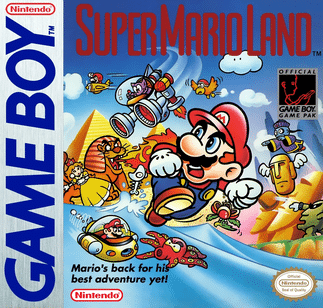
- Super Mario Land (1989) — 18.14 million. One of the console’s four launch titles and the first Mario game not designed by Shigeru Miyamoto, compressing an entire platformer down to a screen the size of a playing card.
- Pokémon Yellow (1998) — 14.64 million. Looked like a cash-in update on paper. In practice it added a Pikachu that followed you on-screen and became a massive seller in its own right.
- Super Mario Land 2: 6 Golden Coins (1992) — 11.18 million. Bigger, sharper, and the game that introduced Wario, who’d go on to headline an entire series of his own.
- Dr. Mario (1990) — 5.34 million. Nintendo’s answer to the Tetris craze it had just helped create, and still one of the tightest puzzle games ever built for a handheld.
- Wario Land: Super Mario Land 3 (1994) — 5.19 million. Wario’s first starring role, and a real break from the Mario formula — no time limit, no princess, just a greedy antihero hauling off as much treasure as the level would let him carry.
- Kirby’s Dream Land (1992) — 5.13 million. HAL Laboratory’s mascot debut, built deliberately easy so younger players could actually finish it, with a tougher difficulty unlocked afterward for everyone else.
- The Legend of Zelda: Link’s Awakening (1993) — 3.83 million. The first Zelda without Hyrule and without Ganon, an odd, dreamlike detour that’s aged into one of the most beloved entries in the whole series.
- Metroid II: Return of Samus (1991) — 1.72 million. The smallest number on this list by a wide margin, and still a genre-defining sequel — it’s the game that gave Samus Aran the redesign every version since has built on.
A couple of things stand out looking at this list as a whole. Every entry but one came straight from Nintendo itself — third-party publishers barely cracked the original Game Boy’s top tier, a pattern that broke down once the Game Boy Advance opened the door wider to outside developers. And sales rank doesn’t track collector value in a straight line. Metroid II sold a fraction of what Tetris did, yet a complete, high-grade copy commands real money today, while million-selling pack-in Tetris carts are common enough that box completeness and condition end up mattering more than raw scarcity.
That gap is worth remembering before you assume a huge sales figure means a cheap find at a flea market table. What actually moves a graded Game Boy cartridge’s value hasn’t changed: whether the box and inserts survived intact, and how well the plastic held its color instead of yellowing under a sunny window for twenty years. If you’re sorting through an old collection and want a straight read on what you’ve actually got, that’s the whole point of what we do.