

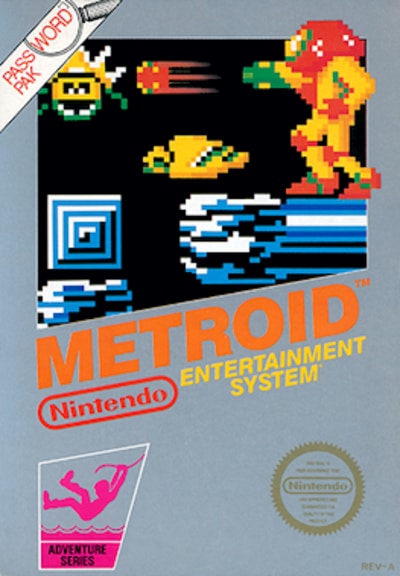
Every other NES game in 1987 told you where to go. Metroid just dropped you on the surface of a hostile planet called Zebes and let the game go quiet. No map, no arrow, no NPC waving you toward the next objective. You either drew your own map on graph paper or you wandered in circles until the layout started to click. That confusion was the point, and it’s a big part of why the game still gets talked about almost forty years later.
Nintendo released Metroid in Japan in August 1986 on the Famicom Disk System, then brought it to North America as a cartridge in August 1987. R&D1, the same team behind the original Game & Watch line and a string of early Nintendo hits, built it around a simple but unusual idea for the era: give players a large, interconnected world and trust them to explore it out of order. Some rooms required equipment you hadn’t found yet. Others hid entire wings of the map behind walls that looked exactly like every other wall, discoverable only by firing a missile at the right spot or rolling into Morph Ball form and squeezing through a gap. Nothing pointed you there. You just had to be curious enough to try.
That structure didn’t have a name yet in 1987. It does now. Combine Metroid’s exploration with the platforming and gradual power-ups of Castlevania II, and you get “Metroidvania,” a genre that still drives major releases decades later, from Hollow Knight to the newer entries in Metroid’s own series. Few NES games can claim they defined a category still shaping game design today.
Then there’s the ending, which became one of gaming’s best-kept surprises for anyone who hadn’t heard the rumor. Finish the game fast enough and the armored, unnamed bounty hunter you’d been controlling removes their helmet. Samus Aran is a woman, revealed only as a reward for skilled, quick play, at a time when almost every lead character in games was assumed male by default. It’s a small moment by today’s standards, staged with none of the fanfare a modern game would give it, but it landed hard in 1987 and still gets cited as one of the medium’s earliest and most memorable subversions of expectation.
Collectors know Metroid for something else too: the cartridge. Nintendo reserved gold-colored carts for a small handful of titles it considered special, The Legend of Zelda among them, and Metroid got the same treatment in North America. That gold shell wasn’t just packaging flair. It signaled a game Nintendo was betting on, and it’s part of why clean, well-preserved copies still draw strong interest from graders and collectors evaluating condition, label wear, and shell color consistency decades later.
Metroid never held your hand, and that’s exactly why it’s still worth playing. If you’re curious how another NES game built an entire identity around exploring somewhere you weren’t supposed to fully understand yet, Blaster Master took a similar gamble a year later with a tank, a sewer, and a mutated frog. For more on the history behind Metroid itself, Wikipedia’s entry covers the development details in more depth. And if you’ve got a copy of Metroid sitting in a closet with that gold shell still intact, it might be worth finding out what grading it could reveal about its condition and value.