

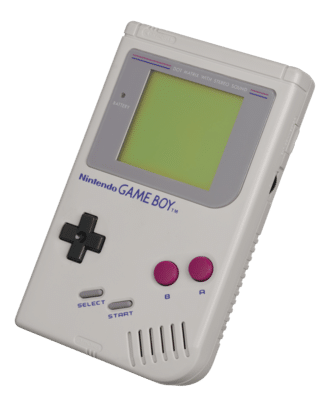
Stephan Scoggins packed a Game Boy for Operation Desert Storm the same way half of America did in 1990: as a way to kill downtime. He had a Tetris cartridge loaded into it, tucked away in his gear in a Saudi Arabia barracks. He was a U.S. Army nurse, not exactly expecting a war zone to double as a gaming lounge, but the little gray brick made the waiting bearable.
On January 16, 1991, that waiting ended. An Iraqi Scud missile hit the barracks. Fire tore through the building, and Scoggins’ Game Boy was sitting right in the middle of it. When he finally got it back, the front panel was scorched black and blistered. The A and B buttons had partially melted into the casing. By any reasonable standard, it was scrap.
Here’s the part that turned it into a legend instead of a footnote: it still worked. Scoggins sent it to Nintendo, expecting nothing more than a courtesy replacement. The technicians who opened the package weren’t prepared for what happened when they popped in a cartridge and hit power. “When we heard its distinctive ‘Ping!’ we couldn’t believe it,” Nintendo later said. The Tetris cartridge still loaded. The screen still lit up. A device that had just survived a missile strike was ready to play.
Nintendo sent Scoggins a new Game Boy and Game Pak as what they called a “Desert Storm courtesy,” and kept the original. That charred, half-melted unit isn’t in a warehouse somewhere gathering dust — it’s on display at the Nintendo NYC store in Rockefeller Center, still functional more than three decades later. Visitors walk past a piece of Gulf War history most of them have no idea is sitting behind the glass.
It’s easy to write this off as a marketing story Nintendo was happy to keep alive, and honestly, they probably were. But the underlying engineering claim holds up. The original Game Boy ran on a Sharp processor housed in a thick, over-built plastic shell, designed by a team that assumed kids would drop it, sit on it, and leave it in a hot car. Nobody at Nintendo in 1989 was designing for a missile strike specifically, but they were designing for abuse, and abuse is abuse whether it comes from a nine-year-old or a war zone.
That same toughness is exactly why so many original DMG-01 units are still kicking around collections today, decades past when anyone expected them to last. It’s also why cosmetic condition, not just function, matters so much when a Game Boy comes in for grading. A shell that survived a Scud missile and still played Tetris is one kind of story. A shell with yellowed plastic, a cracked screen lens, or battery corrosion from decades in someone’s attic tells a different one, and it’s the difference collectors are actually paying for when a high-grade original Game Boy or launch cartridge changes hands.
Most Game Boy stories worth telling involve a kid, a road trip, and dead batteries at the worst possible moment. This one involves a war zone, a missile, and a Tetris cartridge that flat-out refused to quit. Somewhere in that contrast is the whole reason people still collect this stuff — the hardware was built to survive us, and every so often it proves it in ways nobody could’ve scripted.