

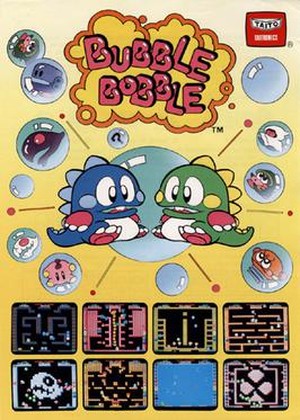
You probably beat Bubble Bobble by yourself at some point in 1989, mashed the controller through level 100, watched the credits roll, and figured that was that. It wasn’t. Taito built an entire second ending into the cartridge, and solo players were never going to see it.
The original arcade game came out in Japan in June 1986 from Taito, designed by Fukio Mitsuji. Two dragons, Bub and Bob, trap enemies in bubbles and pop them before the bubbles drift away on their own. Pop a few at once and better food items spill out. Leave an enemy bubbled too long and it turns pink and speeds up, hunting you down instead of waiting around. The NES version followed in November 1988, built by Taito itself rather than farmed out to a US studio, and it stuck close to the arcade original, down to the hundred floors and the EXTEND letters that handed you a free life.
Here’s the part most players never learned. Floor 99 hides a crystal ball that unlocks everything past level 100, but grabbing it requires two players working together, one of whom has to walk through a wall to reach a door that only appears after the other player grabs the item. Miss it, and the level just restarts. Clear it, and the game keeps going into a second, harder hundred floors, ending in a fight with a boss called Super Drunk. Beat that in cooperative mode and the game finally explains itself: Bub, Bob, and the girlfriends they’d been chasing the whole time are actually humans, transformed by magic, and their parents are missing too. Play alone, and you never find any of that out.
That kind of buried, co-op-only secret is exactly why Contra’s famous 30-lives code spread by word of mouth and Bubble Bobble’s true ending mostly didn’t. A button code gets handed around a schoolyard in a day. A mechanic that needs a second kid sitting next to you, both of you working out a puzzle neither one can finish alone, barely spreads at all. Most of us just assumed level 100 was the whole game.
None of that quiet secrecy hurt its reputation. IGN ranked it the 23rd-best game the NES ever had. GamesRadar+ put it at 24. Nintendo picked it as one of only thirty games for the NES Classic Edition mini-console in 2016, alongside the obvious legends. For a port that never got a marketing push to match Mario or Zelda, that’s a real vote of confidence from people who’d played everything.
Collectors treat it accordingly. A complete, boxed Taito cartridge from 1988 isn’t rare the way a Black Box title is, but a clean box and manual still matter to buyers who want the full presentation, not just a loose cart that plays fine. If you’re trying to figure out where a given copy falls on condition, the graded games gallery is a good place to see what separates a solid player’s copy from one worth paying extra for.
So if you’re one of the people who cleared Bubble Bobble decades ago and never got past Super Drunk, you didn’t miss a glitch. You missed the game working exactly as designed. Go find a second player.