

Every genre on the NES has one rule that never bends. For shoot-’em-ups, it’s this: the screen wants you dead, and you’ll replay the stage another forty times anyway. The library is loaded with these bullet gauntlets, from early arcade conversions to the single most famous cheat code in gaming. Here’s a ranked look at ten of the best, judged by how they actually played between 1986 and 1991.
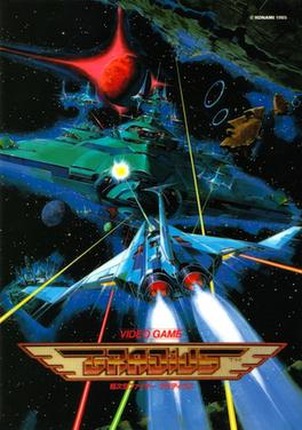
1. Gradius (Konami, NES, December 1986)
Gradius set the template everyone else on this list is reacting to. Instead of grabbing a power-up and getting it instantly, you collect one item type that advances a selection bar, then hit a button to lock in whichever upgrade is lit. The Famicom version also buried a pause-screen code that handed you nearly every upgrade at once. That code didn’t stay buried long — it resurfaced in Contra and Life Force and eventually got a name of its own, the Konami Code. We’ve covered the full story here.
2. Life Force (Konami, NES, August 1988)
Life Force is a strange hybrid. It borrows Salamander’s enemies and backgrounds, swaps in Gradius’s power bar, and lets two players fly side by side the whole way through, which Electronic Gaming Monthly later called one of the NES’s first real simultaneous two-player shooters. Punch in the famous code here and three lives jump to thirty. Full spotlight on this one is here.
3. Zanac (Compile, NES, October 1987)
Zanac’s gimmick is still unusual decades later. An internal system called the Automatic Level of Difficulty Control watches how you play and adjusts the enemy AI accordingly. Spam your main cannon and grab every power-up, and the game gets meaner. Play cautiously, and it backs off. Most shooters just get harder. This one argues with you.
4. Star Soldier (Hudson Soft, NES, 1986)
Star Soldier wasn’t just a game, it was an event. Hudson’s Caravan high-score contests turned this shooter into a nationwide tournament circuit in Japan, with kids lining up to set two-minute scores that got broadcast and remembered for years.
5. Jackal (Konami, NES, October 1988)
Drop a second player in anytime, drive jeeps into occupied territory, and free prisoners for points, all while a machine gun fires straight up and a grenade launcher covers whatever direction you’re facing. IGN later ranked the NES port among its top 100 NES games. In Japan it was Special Forces Jackal; in American arcades it briefly wore a different name, Top Gunner.
6. 1943: The Battle of Midway (Capcom, NES, October 1988)
You’re flying a P-38 Lightning through sixteen stages toward a final showdown with the battleship Yamato, and your fuel gauge doubles as your life bar. Run a second plane alongside a friend’s and you can siphon fuel between them to keep each other airborne a little longer.
7. Section Z (Capcom, NES, 1987)
The arcade original ran through 26 alphabetical corridors. The NES version restructured the whole thing into a sprawling, nonlinear 60-section maze where transporters can send you backward, sideways, or somewhere locked until you’ve met a condition. IGN specifically praised that nonlinear path when it ranked the game among the best on the console.
8. Gun.Smoke (Capcom, NES, February 1988)
A western bounty hunter named Billy Bob rides a vertically scrolling frontier, gunning down outlaws with three firing directions. Find the right pickup and a horse joins you, soaking up hits you’d otherwise eat yourself.
9. Silver Surfer (Software Creations, NES, November 1990)
Already covered here in full, and for good reason: this is the shooter collectors bring up specifically to argue about difficulty. One hit kills you. There is no mercy and no checkpoint forgiveness, and it’s earned a reputation as one of the hardest licensed games on the system.
10. Journey to Silius (Sunsoft, NES, 1990)
A side-scrolling shooter with a strange origin story. It started development as an unlicensed Terminator game before Sunsoft lost the license and reworked it into its own sci-fi revenge plot, keeping most of the mechanical DNA intact.
Complete, high-grade copies of the Konami and Capcom shooters on this list, Gradius and Life Force especially, still move steadily in the collector market, which is worth knowing before you go hunting for a cartridge at a flea market. These games rewarded memorizing a pattern more than reacting to it in real time, and that’s exactly why people still replay them stage by stage instead of just watching a video of someone else doing it.