

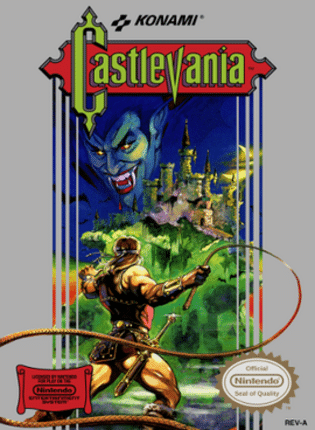
Ask ten NES collectors which game broke more controllers and you will start an argument that never actually ends. Some swear by the drawbridge sequence in Castlevania, where a Cyclops charges out of the dark and knocks you off a ledge into the pit below. Others still flinch at the mention of Ninja Gaiden‘s Stage 6-2, where the game keeps spawning enemies at your back the instant you commit to a jump over spikes. Both games are textbook Nintendo Hard. Only one deserves the crown.
Konami’s Castlevania hit North American NES shelves in 1987, a cartridge port of a Japanese Famicom Disk System release from the year before. You play Simon Belmont, whip in hand, walking — not running, Simon doesn’t run — through six blocks of three stages each toward Dracula’s throne room. The Vampire Killer whip has almost no range, the jump arc locks the second you leave the ground, and staircases turn into death traps whenever a Medusa head drifts into frame. IGN later ranked it the 19th-best NES game ever made. Nintendo Power put it 14th. Critics praised the atmosphere, the Kinuyo Yamashita soundtrack, and the difficulty in the same sentence, which tells you the difficulty was never treated as a flaw.
Tecmo’s Ninja Gaiden landed in North America in March 1989, about two years after Castlevania, and it fought back with a weapon Castlevania didn’t have: story. Over 20 minutes of cinematic cutscenes ran between acts, the first time an NES game had bothered to stage anything like it, using close-ups and shifting camera angles through what Tecmo called its “Tecmo Theater” system. It worked. Electronic Gaming Monthly ranked Ninja Gaiden the #1 game in the country from July through October of 1989 and later named it Game of the Year for the NES. Famitsu gave it 28 out of 40. Demand was strong enough that Tecmo’s US office kept reordering cartridges in batches of 60,000 because stores couldn’t keep it shelved. Then you reach the back half of the game, where enemies fly in mid-jump and knock you into bottomless pits with a frequency that still gets this game cited as one of the hardest the console ever produced.
So which is worse? Castlevania punishes you with geometry — a short whip, narrow stairs, enemies with better reach than you. Ninja Gaiden punishes you with timing — spawn triggers built to interrupt your landing at the worst possible frame, over and over, by design. Castlevania’s difficulty feels earned, like the game respects you enough to be upfront about it from stage one. Ninja Gaiden’s feels personal, like the designers watched a playtester rage-quit Stage 6 and shipped it anyway out of spite. Poll a room of collectors and you’ll hear both answers argued with total conviction, usually accompanied by a specific memory of exactly where each player finally gave up.
Grading offers one more wrinkle worth knowing if you’ve got either cartridge sitting in a drawer. Both games sold well enough that surviving copies are common, but most graded examples land in mid-to-high tiers rather than the very top — a reflection of how hard these carts got played back when nobody expected a used game to matter someday. If you’re curious what separates a well-loved copy from one worth submitting, how it works breaks down what graders actually look for.
Neither game budges from its reputation, and that’s the point. Pick a side if you want. Just don’t be surprised if your answer changes depending on which stage killed you last.