

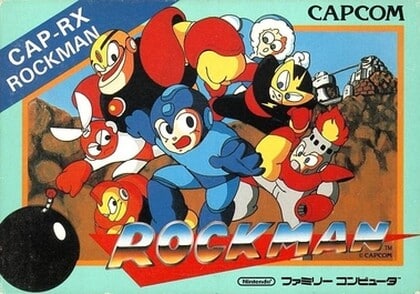
December 1987. You’re standing in front of a wall of NES boxes, and one of them has a guy on the cover who looks like he wandered in from a different game entirely — stiff pose, mismatched colors, a handgun where his arm cannon should be. Nothing about that artwork screams “future ten-sequel franchise.” Nobody at Capcom thought it would be one, either. The sales team reportedly figured the game was a gamble at best, a curiosity from a company that had spent its whole life making arcade cabinets, not living-room software.
Mega Man came together on a six-person team, which sounds impossibly small even by 1987 standards. Director Akira Kitamura oversaw the project. Keiji Inafune, a recent college hire, handled character design and then did the actual pixel-by-pixel sprite work himself, because there simply weren’t enough people to split the job. Composer Manami Matsumae wrote the music and sound effects and helped with programming, all in about three months, working within a sound chip that could only play three notes at once. That’s the entire origin story of one of gaming’s longest-running heroes: a handful of people, a tight deadline, and no budget for a bigger crew.
What they built still holds up as a smart piece of design. Six Robot Masters, tackled in whatever order you choose, each one dropping a weapon when defeated. Beat Fire Man and you’ve got a flamethrower that shreds Ice Man; beat Ice Man and his freeze weapon stops Fire Man cold. No single weapon dominates the whole game, which forces you to actually think about turn order instead of grinding one overpowered gun through every stage. GamesRadar has pointed to that open, pick-your-path stage structure as an early ancestor of the mission-select systems modern open-world games lean on. It’s also brutal. NES-era brutal. The kind of difficulty that earned the console its “Nintendo Hard” reputation, years before that phrase existed.
That infamous cover deserves a quick mention. A rushed marketer reportedly threw it together in about six hours for the U.S. localization, and it’s been mocked on worst-box-art lists from GameSpy to Wired ever since. Capcom eventually leaned into the joke — that orange-suited, gun-toting figure got resurrected decades later as a playable character in Street Fighter X Tekken, credited simply as “Bad Box Art Mega Man.”
Here’s the part that surprised even Capcom: the game found its audience anyway. Word of mouth carried it past that cover, and it became enough of a sleeper hit to justify a sequel two years later — the game that actually turned this into a franchise, and got its own memorable box art disaster, which we covered in our look at Mega Man 2. The original picked up a Golden Joystick Award for best 8-bit console game in 1990 and later landed at #30 on IGN’s ranking of the best NES games of all time. Not bad for a title the publisher’s own sales department didn’t believe in.
One more small detail: if you’ve ever wondered why Mega Man is blue, it wasn’t a creative statement. The NES could only display a limited palette at once, and blue offered the most usable shades on the system, giving Inafune more room to shade the sprite. Function first. The iconic look came almost by accident.
For collectors, early Mega Man cartridges carry real weight. First-print copies from that original 1987-88 run — box, manual, and cart together, in strong condition — are the ones that draw the most attention when they come up for grading, since so many were played hard and the boxes rarely survived intact. If you’re curious what separates a common loose cart from a graded piece worth chasing, our gallery of graded games is a good place to see the difference condition makes.
Six people, three months, a cover nobody liked, and a game nobody at the company expected to matter. Mega Man is proof that sometimes the underdog story isn’t marketing spin. Full history on Wikipedia’s Mega Man (1987 video game) page, if you want to go further down the rabbit hole.