

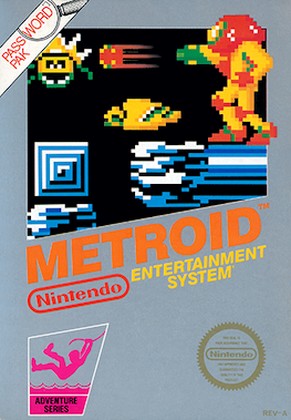
Picture two kids unwrapping NES cartridges in the same month of 1987, a few towns apart. One drops into a cave with no map, no instructions beyond “find stuff,” and spends an hour just figuring out which wall isn’t actually a wall. The other walks into a castle gate, sees a zombie shuffle toward him, and understands immediately: left to right, whip in hand, don’t stop moving. Both kids think they’re playing the scariest, most ambitious game on the system. Neither one is wrong.
Those two games are Metroid and Castlevania, and together they ended up lending their names to a genre that, decades later, still gets argued about on message boards. “Metroidvania” is the term. Here’s the part that trips people up: the original Castlevania isn’t really a Metroidvania at all.
Metroid hit Japan’s Famicom Disk System on August 6, 1986, then reached American NES shelves in August 1987. Nintendo R&D1 and Intelligent Systems built it under Gunpei Yokoi, and it did something almost nothing else on the console attempted: it handed players a planet instead of a level list. No stage select, no “world 1-1.” You explored, backtracked, and came back to a locked door hours later once you’d found the item that opened it. It even saved your progress with a 24-character password you scribbled on paper, because battery backup wasn’t standard yet. Finish it fast enough and the ending reveals something the box art never mentioned: Samus Aran, without the suit, is a woman. It sold roughly 2.73 million copies worldwide and still shows up on best-ever lists from Nintendo Power and Game Informer.
Castlevania arrived the next month in Japan, September 26, 1986, also on the Famicom Disk System, with Konami’s NES cartridge following in North America on April 30, 1987. It is, structurally, the opposite of Metroid. Six blocks of three stages apiece, eighteen levels total, moving in one direction with Simon Belmont’s Vampire Killer whip and a deliberately stiff jump that punished sloppy timing. No exploring required, no password needed if you could just clear it. Famitsu handed it four scores that averaged to the highest rating the magazine gave any game that year. It sold over a million copies and still lands on “greatest games ever made” lists today.
So why is a linear, horror-themed gauntlet half of a word that means “explore everything, backtrack constantly”? Blame a later sequel. When Konami’s Koji Igarashi built Castlevania: Symphony of the Night in 1997, he reached for something closer to a free-roaming map, and critics noticed it played like Metroid wearing a cape. Journalist Jeremy Parish picked up the term from a former colleague, Scott Sharkey, who’d been using it to describe exactly that borrowing. The name stuck to the whole series retroactively, even though the 1986 original that started it all never explores anywhere.
Collectors tend to chase both for the same reason: they’re early, they’re genuinely good, and they’re the kind of carts a grading service sees constantly, which means condition differences at the top end move prices a lot. A clean, graded, complete-in-box Metroid or Castlevania is never a bargain, but it’s also never hard to sell. If you already picked a side in the Zelda vs. Metroid debate over Nintendo’s other 1986 exploration gamble, this one’s worth settling too.
Ask which game deserves more credit for the genre named after both of them, and the honest answer is uncomfortable: Metroid built the thing people mean when they say “Metroidvania.” Castlevania just happened to be the franchise standing next to it eleven years later when somebody needed a second syllable. Doesn’t make the whip any less satisfying to swing.