

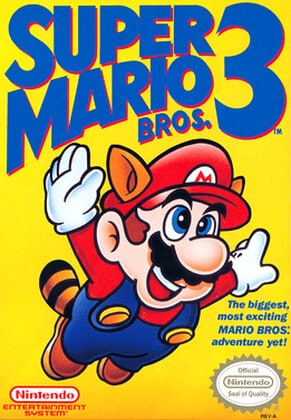
Picture a theater in the summer of 1989. The lights are down for The Wizard, a mostly forgettable road-trip movie about a kid who wants to compete in a Nintendo tournament, and then the screen fills with a game nobody in the audience has ever seen. Airships. Raccoon ears. A map instead of a straight line. Kids left that theater asking their parents when they could buy it. The answer was still eight months away.
That game was Super Mario Bros. 3, and Nintendo had already been sitting on it for a while. It launched in Japan on October 23, 1988, developed in-house by Nintendo R&D4 under Shigeru Miyamoto and Takashi Tezuka. North American players didn’t get their hands on it until February 12, 1990, which meant the movie preview did real work: it built well over a year of hype for a game that, by most accounts, took close to two years to make and cost somewhere between $800,000 and $1.3 million to produce. That’s a real budget for 1988.
The wait made sense once people actually played it. The original Super Mario Bros. was a straight line to the castle. Super Mario Bros. 3 gave you a world map with branching paths, hidden warp whistles, and mini-games tucked into overworld nodes. It also handed Mario an entire wardrobe: the Super Leaf turned him into raccoon Mario, capable of a slow-fall float and a tail attack; the Tanooki Suit added a stone-statue disguise on top of that; the Frog Suit made underwater levels bearable for once. None of it felt like a gimmick pasted onto the first game. It felt like the format had been rebuilt from the ground up, and a lot of the level design tricks introduced here still show up in Mario games today.
Sales backed up the hype. Super Mario Bros. 3 sold more than 17 million copies worldwide, making it the third best-selling game in the entire NES library, behind only the pack-in Super Mario Bros. and Duck Hunt. In the US alone it reportedly moved 250,000 copies in its first two days and generated something like $595 million in domestic revenue by early 1992. Computer and Video Games gave it a 98 out of 100 at the time, and it still lands near the top of nearly every “best NES games” list published since. For a sequel that had to follow one of the most famous games ever made, that’s not a small thing.
None of that history is exactly a secret to collectors. We’ve written before about that Wizard connection, and Super Mario Bros. 3 sits exactly where you’d expect a game like this to sit in the grading world: common enough that a loose, tested cartridge won’t break the bank, but a genuinely sealed or high-grade copy still draws real attention at auction because so few survived in that condition. Sales volume this high means there are plenty of cartridges out there. It also means there’s a wide gap between “played” and “pristine,” and that gap is where the value lives.
If you’ve got a copy sitting in a drawer and you’re curious where it might land on that scale, our gallery of graded video games is a good place to see what condition actually looks like side by side. Not every cartridge needs to go that route. But for a game this important to the NES library, it’s worth knowing the difference between a well-loved copy and one worth protecting.