

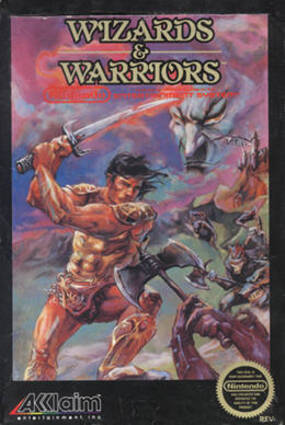
Somewhere between the Zelda cartridges and the Ninja Gaiden copies in a lot of old NES collections sits a black cartridge with a silver knight on the label, easy to overlook next to bigger names. Rare wasn’t a household name yet when Wizards & Warriors hit store shelves in December 1987. The British studio had shipped exactly one other NES game before this one, a skiing title called Slalom. Wizards & Warriors was the release that showed what the team could actually do with the hardware, years before anyone associated the Rare logo with Donkey Kong Country or GoldenEye 007.
Acclaim Entertainment published it, and that detail matters more than it sounds. Every prior Acclaim release had been a licensed port of somebody else’s arcade game. Wizards & Warriors was the company’s first title built and published as its own property in North America, meaning Acclaim had real skin in the game alongside Rare on this one.
The plot is simple fantasy setup. The knight Kuros treks through forest and cave on his way to Castle IronSpire, hunting the wizard Malkil to rescue a kidnapped princess. What made the game stick with players wasn’t the story, though. It was the exploration. Color-coded doors needed matching keys. Boots of Force smashed straight through walls. A cloak of invisibility let Kuros slip past enemies he had no hope of beating head-on. Levitation potions opened up sections of the map that looked unreachable a minute earlier. For a 1987 action game, that’s a surprising amount of backtrack-and-discover design, closer to an early adventure game than a straight hack-and-slash.
Critics noticed. Computer Gaming World pushed back on the idea that every video game amounted to little more than a target shoot, holding up Wizards & Warriors as the counterexample. Retro Gamer later called it technically well ahead of most of what else sat on NES shelves that year. Nintendo Power nominated it for Best Graphics and Sound at its 1988 awards. The soundtrack came from David Wise, a name that meant nothing to most players in 1987 and everything a few years later, once his work on Donkey Kong Country turned him into one of gaming’s most recognized composers.
The game sold well enough that Rare and Acclaim brought Kuros back twice more. Ironsword: Wizards & Warriors II followed in 1989, then a Game Boy spinoff, Wizards & Warriors X: The Fortress of Fear, arrived the year after that. A third mainline NES entry, Kuros: Visions of Power, closed out the series in 1992. There was even a Worlds of Power novelization, the same book series that turned Bad Dudes and Ninja Gaiden into paperback fiction for kids who’d already beaten the game and wanted more of it anyway.
None of that early Rare output gets discussed the way Battletoads does, but it belongs to the same climb. A studio that shipped two rough, ambitious NES games in 1987 spent the rest of the decade turning into one of Nintendo’s most trusted partners.
Loose Wizards & Warriors carts turn up often enough that one won’t break the bank. Complete-in-box copies with an intact IronSpire label are a different story. That thin cardboard box takes damage easily, and its condition is usually what separates a genuine collector’s piece from a beat-up shelf find. It is exactly the kind of early Rare cartridge worth a proper look in the gallery of graded copies before anyone assumes it’s just a common find.