

You rented the movie, you loved the movie, and then you rented the video game because it had the same face on the box. By level two, you learned something the movie never taught you: putting a familiar name on a cartridge and building a good game underneath it are two completely different jobs. Nowhere was that gap more obvious than on the NES, where movie and TV licenses produced some of the console’s most infamous games — and, once in a while, some of its best.
Blame goes mostly to LJN. The toy company discovered it could buy the rights to almost anything and ship a cartridge before the film left theaters, and the budget went to the license, not the level design. “LJN game” became its own insult among collectors. Here’s how ten of the NES’s biggest movie and TV tie-ins actually stack up, worst to best.
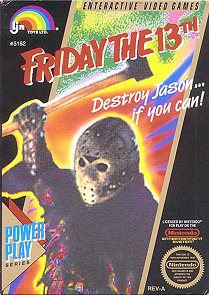
10. Friday the 13th (LJN/Atlus, February 1989) — Six camp counselors, one endless swamp, and a Jason Voorhees who respawns faster than you can escape him. Nintendo Power later called it the sixth-worst game ever made; Electronic Gaming Monthly ranked it eighth. The neon box art is more fun than the cartridge inside it.
9. Total Recall (Acclaim/Interplay, 1990) — Interplay’s NES version swapped the arcade action other platforms got for a clumsy mix of platforming and top-down driving, loosely tied to the original short story. EGM’s Steve Harris called it “a new low,” and the magazine later ranked it fifth on its list of the worst games ever made.
8. Back to the Future (LJN/Beam Software, September 1989) — Marty McFly spends most of it dodging thrown hearts and playing a guitar minigame instead of anything resembling time travel. Screenwriter Bob Gale publicly called it one of the worst games ever made and said LJN ignored every note he gave them.
7. Home Alone (THQ/Bethesda, October 1991) — Kevin sets traps and hides from Harry and Marv for twenty in-game minutes, which feels about that long in real time too. EGM’s reviewers handed it scores as low as 3 out of 10, and the game reportedly sold around 50,000 copies.
6. Ghostbusters (NES, October 1988) — Not the same game as the well-liked Activision original from a few years earlier. This port stripped out animation and changed the ending, and Edge magazine later complained the graphics were “so primitive it becomes hard to follow most of what’s going on.”
5. The Karate Kid (LJN/Atlus, November 1987) — One of LJN’s earliest movie games, and you can feel the studio still working out the formula: side-scrolling brawling, an Okinawa gauntlet, and a bizarre finale where you fight a boss while also keeping someone from drowning.
4. Teenage Mutant Ninja Turtles (Ultra Games/Konami, May 1989) — Beloved right up until the underwater dam level, where a random current and unforgiving collision detection have stranded three generations of players. It still sold enormously well, proving the Turtles could carry a game that frustrated almost everyone who touched it.
3. A Nightmare on Elm Street (LJN/Rare, October 1990) — Proof LJN could occasionally hire the right studio. Rare built a genuine beat-‘em-up with a sleep meter that drags all four players into Freddy’s dream world once it empties. Reviews were mixed at the time, but modern retrospectives call it a low-rent Castlevania worth revisiting.
2. Batman: The Video Game (Sunsoft, February 1990) — Sunsoft paid roughly a million dollars for the Batman license and built one of the best action-platformers on the console, wall-jumps included. EGM named it Best Movie-to-Game of 1989, and IGN later ranked it among the NES’s hundred best games, period.
1. DuckTales (Capcom, October 1989) — The gold standard. Capcom’s own team built it instead of farming it out, and Scrooge McDuck’s pogo-cane mechanic turned out to be one of the best ideas the NES ever had. It sold around 1.67 million copies, making it Capcom’s best-selling NES game, cartoon license included. The full stories behind both DuckTales and Batman are worth a longer look if you want to see exactly how they broke the pattern.
The quality gap barely shows up in what these cartridges are worth today. A complete Friday the 13th and a complete DuckTales both draw real interest from collectors chasing a full run of NES box art, and grading cares about a cartridge’s condition, not whether the game inside it was any good. Our gallery of graded games shows how wildly that range can run, from beat-up LJN castoffs to pristine sealed copies most of us never touched.