

Every kid who got a movie or cartoon game under the tree in the early ’90s remembers the sinking feeling of booting it up and discovering the box art had lied. The Game Boy had the same problem as the NES — we already ran the numbers on NES movie and TV tie-ins — but its tiny cartridges hid some real surprises. A few of these games are better than anything with “Batman” or “Spider-Man” slapped on the label had any right to be. A couple are so rough they’re collector curiosities for the wrong reasons. Here’s the full spread, counted down from ten.
10. Spider-Man 2 (LJN, 1992). Bits Studio built a sequel nobody asked for, and the UK gaming press tore it apart on arrival. It’s here because a list like this needs at least one cautionary tale, and this is close to the platonic ideal of a licensed cash-grab gone wrong.
9. Home Alone 2: Lost in New York (THQ/Imagineering, October 1992). Electronic Gaming Monthly handed it the “Worst Sequel of 1992” award, a hard thing to win in a year with plenty of competition. AllGame wasn’t any kinder, landing it at 2.5 out of 5. It still sold.
8. Taz-Mania (Sunsoft, September 1994). There were actually two different Game Boy Taz-Mania games — this is the David A. Palmer Productions one Sunsoft published stateside. Consoles+ gave it a respectable 81 percent. Even late in the Game Boy’s life, licensed platformers were still finding an audience.
7. WWF Superstars (LJN, 1991). The first WWF game to reach a Game Boy screen, built around the syndicated television show rather than any single pay-per-view. Wrestling fans who couldn’t swing the NES cartridge got a pocket version of the same body slams.
6. The Amazing Spider-Man (Rare, published by LJN, July 1990). This is Rare in its pre-Donkey Kong Country years. Electronic Gaming Monthly’s four reviewers landed in the 7-to-8 range across the board — solid and unspectacular, which is exactly what a launch-window superhero game should be.
5. Bugs Bunny’s Crazy Castle (Kemco, 1990). A puzzle-platformer riding Looney Tunes licensing that ended up with more staying power than most movie tie-ins from the same year. It spawned a long-running series that outlived nearly everything else on this list.
4. Batman: The Video Game (Sunsoft, June 1990). Built by mostly the same Sunsoft team behind the beloved NES version, but reworked into a platformer-shooter hybrid critics compared to Super Mario Land. It sold over 500,000 copies by the end of 1990, and the Batwing segments still hold up.
3. Darkwing Duck (Capcom, February 1993). Nintendo Power ranked it the third-best Game Boy game of the entire year — not just among licensed games, the whole year. Capcom’s platforming pedigree, the same instincts behind Mega Man, was doing most of the work.
2. The Little Mermaid (Capcom, July 1991). Good enough that Nintendo brought it back under the Player’s Choice label in 1997, six years after release — a rare honor for any movie tie-in. Different stage layouts and sound design from the NES version make it worth tracking down on its own terms.
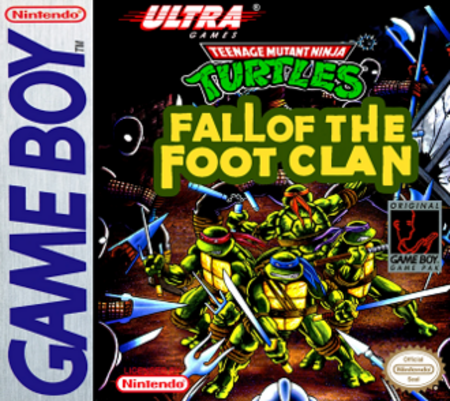
1. Teenage Mutant Ninja Turtles: Fall of the Foot Clan (Konami, August 1990). The Turtles’ first Game Boy outing sold nearly 900,000 copies and pulled in roughly $27 million at retail — numbers most of this list can only dream about. Nintendo Power later ranked it 15th on its list of the best Game Boy games ever made, full stop, no “licensed game” asterisk attached. Konami followed it with Back from the Sewers in 1991, but this first cartridge is the one that proved a cartoon tie-in could actually be good. We covered the Turtles’ much rougher NES outing separately, if you want the contrast.
A few of these — the Turtles cartridge especially — show up at grading submissions more often than you’d expect for games built around a license instead of an original idea. Condition still drives the price more than the name on the box; a mint Fall of the Foot Clan in its original packaging will out-earn a beat-up copy of something far rarer. Curious how rarity alone stacks up? We’ve also ranked the rarest Game Boy games ever made, and our gallery of graded cartridges is a good place to start comparing your own shelf.