

Ask two different collectors which NES game actually earned its reputation for being brutal, and you’ll get two different answers before you finish the question. One camp says Ghosts ‘n Goblins. The other says Castlevania. Both are right, and both are talking about a completely different kind of pain.
Capcom’s Ghosts ‘n Goblins hit arcades in 1985 and landed on the NES in November 1986, ported by Micronics. The setup is simple. A knight in armor fights through a graveyard to rescue a princess. The execution is not simple at all. Knight Arthur dies in two hits. Enemies spawn in spots the game never warns you about. There’s no save feature, so every run starts from zero. And when you finally beat the final boss, Astaroth, the game doesn’t end. It makes you play the entire thing again on a harder difficulty just to see the real ending. Nobody told you that going in. Reviewers at the time still respected it. Computer Gaming World called the NES version an excellent showcase for the hardware. Modern retrospectives rank it among the hardest games ever made. Game Rant put it at number five on an all-time difficulty list. The NES port sold 1.64 million copies worldwide, which tells you plenty of people kept coming back for more punishment.
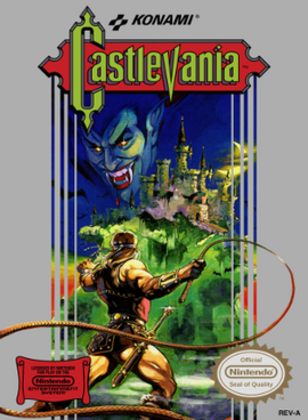
Castlevania took a different road to the same reputation. Konami released it on the Famicom Disk System in Japan in September 1986, then brought it to American NES cartridges in April 1987. Simon Belmont doesn’t get overwhelmed by a flood of enemies so much as betrayed by his own weapon. The whip has a half-beat delay between the button press and the actual crack, and the game expects you to plan around that delay instead of mashing through it. Lose your footing near a staircase or a spiked ceiling and you lose a life outright, no matter how much health you had left. Konami originally planned a whip that could strike in multiple directions. They cut it. Super Castlevania IV picked that idea back up years later, which tells you the first game was intentionally more rigid than it had to be.
Critics loved it anyway. Famicom Tsūshin scored the Japanese version in the high 8s and 9s. Computer and Video Games gave the NES release 80 percent, right down to complaining about the color palette while admitting the gameplay carried it. Nintendo Power later ranked it 22nd among all NES games, then bumped it to 14th two years after that. It sold over a million copies, a real number for a game built around making you feel like you’d never quite mastered it.
So which one actually deserves the crown? Ghosts ‘n Goblins wins on raw unfairness. Two-hit deaths and a secret second playthrough requirement are the kind of design decisions that would get a modern game dragged across every forum on the internet. But Castlevania wins on craft. Its difficulty comes from a system you can learn and master, not just survive. That’s probably why it spawned a decades-long franchise and Ghosts ‘n Goblins became more of a cautionary tale collectors trade stories about.
Either way, grading these two cartridges comes down to the same boring details that decide most NES values: label gloss, square corners, whether the end flap got torn opening the box. Rarity isn’t the separator here since both sold well enough that complete copies still turn up regularly. If you’re chasing a high numeric grade on either one, check our full Ghosts ‘n Goblins history and our deep dive on Castlevania for what made each one tick, and browse our gallery of graded cartridges to see what condition actually looks like on cardboard this old.