

Picture a Friday night in 1991. A Blockbuster rental sleeve sits on the carpet, two controllers get passed back and forth, and somebody’s older cousin is narrating like he’s seen it all before. One kid swears the hard game is the one with the lasers and the exploding alien hearts. Another kid just wants someone else to drive the hoverbike so he doesn’t have to watch that level crash into the wall one more time. That argument, Contra versus Battletoads, never really got settled. It just moved from living room carpets to internet forums.
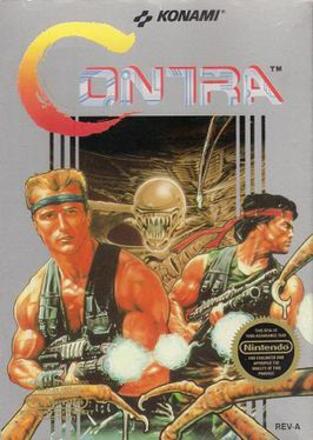
Contra arrived in arcades in 1987 and landed on the NES on February 12, 1988, ported by its own creator, Konami. It sold roughly 2 million cartridges in the U.S., which was enormous for a game that gave you three lives and no mercy. Electronic Gaming Monthly named it Best Action Game of 1988, and IGN later ranked it the toughest game to actually finish. Most collectors know the cover art, too: British illustrator Bob Wakelin borrowed the silhouettes straight from Predator and Rambo, which tells you exactly what audience Konami was chasing. Then there’s the code. Thirty lives instead of three, tapped out on a controller before the title screen even faded, is still the most famous cheat in gaming history. Read the full story in our Contra spotlight.
Battletoads showed up three years later, developed by Rare and published in North America by Tradewest in June 1991. It sold around 1.25 million NES copies by the following September, and it swept Nintendo Power’s 1991 awards, including Overall Best Game. None of that is what people remember first. They remember the Turbo Tunnel, the third level’s high-speed hoverbike chase, where one clipped wall means starting over with zero warning and zero mercy. We covered the whole brutal history, six-week crunch included, in our Battletoads spotlight.
So which one was actually harder?
Contra’s difficulty is the kind you can study. Enemy patterns repeat. Bullet paths are memorizable. A skilled player, or two players who trust each other, can clear it on default lives if they’ve put in the practice. That’s why the Konami Code became folklore instead of a necessity: it wasn’t required so much as it was generous.
Battletoads plays by different rules. The Turbo Tunnel demands frame-perfect reactions the very first time you see it, with no ramp-up and no pattern to learn until you’ve already died a dozen times. One theory, floated by outlets like Nerdist, holds that Rare and Tradewest built the difficulty on purpose to discourage weekend rentals and push kids toward buying the cartridge outright. GameTrailers later ranked it the single hardest game ever made. Whether that was a design philosophy or a happy accident for sales, it worked. Everyone who rented it has a Turbo Tunnel story.
Both games hold up as genuinely great action titles underneath the difficulty conversation, and that’s easy to lose in the “which one is harder” argument. Contra rewards precision. Battletoads punishes hesitation. Neither one is wrong to call the hardest game you ever owned.
There’s a grading wrinkle worth knowing if either title is sitting in your closet. Contra sold well enough that loose carts are common, but early-production sealed copies still bring strong money because so few survived intact. Battletoads tells a different story. Cartridges and manuals from that era show disproportionate wear, corners worn soft from being slammed down after another Turbo Tunnel death, because so many copies got played to the edge of destruction rather than shelved. A clean, high-grade Battletoads box is rarer than its sales numbers would suggest. You can browse examples of both in our gallery of graded games.
So, which side are you on? Grab a friend, load up either cartridge, and settle it the old way.