

Two kids walk into the same video rental counter in the summer of 1989. One grabs Double Dragon. The other grabs Teenage Mutant Ninja Turtles. Both think they’re getting the arcade game they’d been dropping quarters into all spring. Only one of them is right.
Double Dragon actually is what it says on the box. Technōs Japan built the NES version as a real port of its own 1987 arcade brawler — same streets, same gang war, same basic plot. Tradewest published it stateside in June 1988, and it moved fast. The cartridge sold out in its first two weeks on shelves and became America’s top-selling NES game by that July, with roughly 100,000 copies gone in the first month and demand pushing toward a million cartridges by the holidays. Pretty remarkable for a port built by a studio still learning the hardware.
That inexperience shows. Whatever you were expecting from the arcade, the NES version cut it down to size. The biggest casualty was simultaneous two-player — the arcade let you and a friend punch through the Black Warriors side by side, but the home version couldn’t push two players on screen at once, so it became alternating turns instead, with a redrawn plot that makes Billy the hero and his own twin brother Jimmy the final boss. Enemies got simpler too. You’ll only ever see two identical goons on screen at a time, and dropped weapons vanish the moment you clear a wave. Reviewers mostly shrugged that off anyway, praising the port in outlets like Computer and Video Games despite a well-documented pile of bugs and glitches.
Teenage Mutant Ninja Turtles took the opposite bet. Konami had an actual TMNT arcade brawler in the works that same year, and you’d assume the NES game was just a scaled-down version of it. It wasn’t. The two were built side by side as entirely separate games, sharing a license and a release year and almost nothing else. The NES version dropped players onto an overhead map connecting six side-scrolling stages, switching freely between all four turtles — a structure that owes more to Zelda than to any beat-’em-up.
Nobody remembers that structure. They remember the dam.
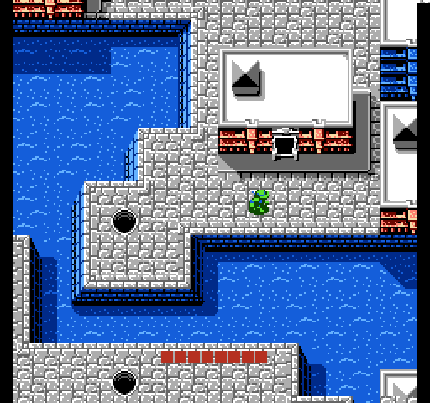
Stage two drops you underwater to defuse a chain of bombs against a draining timer, while Foot Clan enemies chip away at a tiny health bar and the current keeps shoving you into walls. It became the most notorious five minutes on the whole console, and it’s a safe bet more rental copies got returned unfinished at that dam than at any other single point in an NES game — something we’ve written about before. And yet the game sold anyway: over a million cartridges in the US by May 1990, more than four million worldwide by the end of that year, and a $125 million haul that still landed a Game of the Year nod from Computer Entertainer at the 1989 CES awards.
So which one actually earned your allowance? Double Dragon kept faith with the arcade formula and got punished for its studio’s inexperience. Teenage Mutant Ninja Turtles abandoned the arcade formula entirely and got rewarded anyway, dam level and all. If you’re chasing either one for a collection now, condition matters more than nostalgia. TMNT’s astronomical print run keeps loose carts cheap, but a tight, complete box with the original Turtles art intact is a different animal than the beat-up rental copies most of us actually grew up playing. Here’s what we look for when grading a copy of either one.