

Ask five NES collectors to name the best platformer on the console and you’ll get five different answers, plus an argument about whether Metroid even counts. This list skips that fight entirely. Ten games, ranked on sales, critical reception, and how much a real cartridge costs today if you want to own one of them.
10. Blaster Master (Sunsoft, 1988). Half tank shooter, half foot-platformer, Sunsoft’s import let players pilot the SOFIA tank through a mutant-infested planet, then ditch it to climb on foot when the tunnels got too tight. The hybrid was strange enough in 1988 to spawn sequels for three decades, most recently the Blaster Master Zero reboots.
9. Bionic Commando (Capcom, 1988). There’s no jump button. Ladd swings a grappling hook instead, and that one missing button became the whole identity of the game. GamesRadar later ranked it the 4th-best NES game ever made, and Nintendo Power put it on the cover of just its second issue.
8. DuckTales (Capcom, 1989). Scrooge McDuck’s pogo-cane bounce is one of the cleverest jump mechanics the console ever produced, and Capcom recycled the idea almost wholesale for Mega Man 2’s Rush Coil sections a few months later. It sold around 1.67 million copies in the US, respectable for a licensed cartoon tie-in.
7. Battletoads (Rare/Tradewest, 1991). Famous for the wall-slam difficulty spike on the third level, and for being nearly impossible to finish in two-player mode without a controlled argument. It moved roughly 1.25 million units, and it’s still the first game collectors bring up when the topic of “unfair” comes up around a card table.
6. Ninja Gaiden (Tecmo, 1988). One of the first console games to treat its cutscenes as actual storytelling instead of a loading screen, with a Ryu Hayabusa narrative that made the whole package feel like an arcade beat-’em-up wearing a platformer’s skin. Roughly 1.8 million copies sold in the US.
5. Little Samson (Taito, 1992). Four playable characters and some of the most detailed sprite work on the console couldn’t save it from terrible timing — it hit shelves just as retailers were clearing space for the SNES. Low print numbers turned it into one of the rarest complete NES carts on the market. We went deep on just how thin that print run really was, and why a complete copy now costs what it does.
4. Castlevania (Konami, 1986). Simon Belmont doesn’t so much platform as negotiate with the level — the whip’s arc and Konami’s famously stiff jump physics turn every staircase into a small puzzle. It moved about a million copies in the US and set the visual language every vampire-hunting game since has borrowed from.
3. Kirby’s Adventure (HAL Laboratory, 1993). Released deep into the SNES era and it still topped Nintendo Power’s own reader poll for best NES game. Copy-ability, hover flight, and the gentlest difficulty curve on this list didn’t stop it from selling 1.75 million copies anyway.
2. Mega Man 2 (Capcom, 1989). Nearly cancelled as an underfunded side project, it went on to outsell the original several times over — 1.51 million US copies — mostly on the strength of Takashi Tateishi’s soundtrack and a boss-weakness system every sequel since has kept intact. We covered the whole box-art-gun saga here.
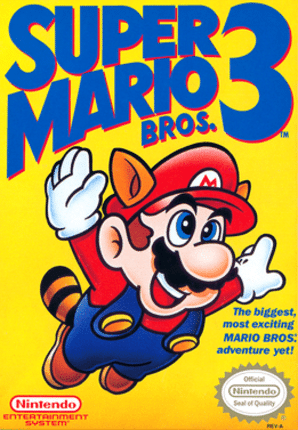
1. Super Mario Bros. 3 (Nintendo, 1988). Eighteen million copies sold in the US alone, still the best-selling standalone NES game by a wide margin, no pack-in bundling required. The Tanooki Suit, the overworld map, and Koopalings with actual personalities set a template Nintendo is still following forty years later. It’s also a good case study in why box variants matter to a grade — we broke down the print differences that separate a common copy from a genuinely scarce one.
That’s the list. Argue amongst yourselves about where Metroid would have landed if we’d let it in the door.