

Nintendo Power subscribers who renewed early in 1990 got a strange bonus in the mail: a role-playing game nobody had asked for. Dragon Warrior had flopped at retail seven months earlier, and Nintendo was sitting on a warehouse full of unsold carts. Giving hundreds of thousands away as a subscriber premium wasn’t generosity. It was inventory management. And yet this is the game most historians now credit with teaching an entire console generation how a role-playing game is supposed to work.
Dragon Quest launched in Japan in May 1986, built by Chunsoft and published by Enix, with designer Yuji Horii borrowing heavily from Wizardry and Ultima to make something a console audience with no PC-RPG background could actually pick up. It worked. The game sold 1.5 million copies in Japan and swept the Famitsu awards that year, including Game of the Year. When it finally crossed the Pacific as Dragon Warrior in August 1989, though, American kids weren’t lining up. It needed that Nintendo Power giveaway to crack roughly 500,000 units and land as the third best-selling release of 1989 — a ranking padded almost entirely by copies nobody paid for.
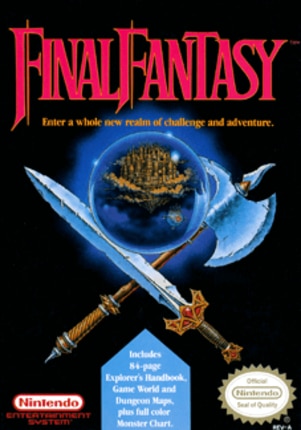
Final Fantasy tells a rougher origin story. By late 1987, Square was close to broke, and creator Hironobu Sakaguchi had a reputation as a boss nobody wanted to work under — only three colleagues signed on for the project. The name itself was a hedge: Sakaguchi figured he’d probably leave the industry if it flopped, and the company might not survive it either. It didn’t flop. Japan bought 520,000 copies, and when the game reached the NES in July 1990, it sold 700,000 in North America — more than Dragon Warrior managed even with Nintendo subsidizing half its own sales figure.
So which one actually built the American audience for console RPGs? Dragon Warrior has the stronger claim to originating it. It got there first and set the template still in use today: turn-based combat, experience levels, buying gear from a shop, a battery-backed save instead of a password you’d copy onto a legal pad. Retrospective reviewers still call it a flawed game by modern standards, slow and visually plain, but nobody disputes what it kicked off.
Final Fantasy has the stronger claim to winning it. It arrived a year later, looked and played better, earned the more favorable reviews of the two, and moved more copies in the US without a corporate giveaway propping up the number. It also did something Dragon Warrior’s NES sequel never managed here: it launched a franchise Americans kept buying for decades.
There’s a collecting wrinkle worth knowing if you’re chasing either one. Those Nintendo Power giveaway copies of Dragon Warrior shipped in simpler packaging than the original retail release, not the full box art most collectors picture. A complete, correctly matched retail copy is scarcer than the sales figures alone would suggest, and it’s exactly the kind of detail worth confirming before you assume any loose Dragon Warrior cart is a common pickup. That’s the sort of thing our graders check line by line — see how the process works at how it works.
Score the debate however you like. Give Dragon Warrior credit for showing up first. Give Final Fantasy credit for making people stay.