

Somewhere around 1996, a kid who’d already worn the paint off his Game Boy’s D-pad plugged in Link’s Awakening for the hundredth time, just to visit Marin on the beach one more time. Two years later, that same kid begged his parents for a copy of some weird new game about catching monsters that his friends wouldn’t stop talking about at recess. Same gray brick of a console. Two completely different reasons to never put it down.
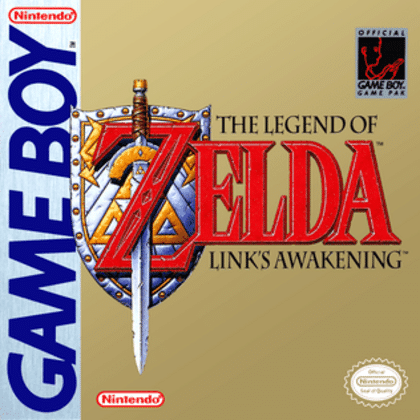
Link’s Awakening technically wasn’t supposed to exist. By Nintendo’s own account, a handful of staffers, including programmer Kazuaki Morita, started messing around with one of the earliest Game Boy dev kits after hours, building a scaled-down Zelda dungeon crawler just to see if it could be done. Director Takashi Tezuka noticed, got official approval, and spent roughly a year and a half turning the after-hours experiment into a real game — the same portable already carrying Metroid II’s redesign of Samus. Because nobody expected it to ship, the team let itself get weird. Goombas and Piranha Plants from Super Mario Bros. wander the island. A Chain Chomp guards a cave. The story drops Princess Zelda and the Triforce entirely in favor of a shipwrecked Link trying to wake a sleeping whale god. Tezuka has called the result “a parody of The Legend of Zelda,” which is an odd thing to say about a game that topped the Famitsu charts and became the best-selling Game Boy title in North America the month it launched in August 1993.
Pokémon Red and Blue took the opposite road to greatness: six years of it. Game Freak’s Satoshi Tajiri pitched the concept in 1990, partly out of frustration playing Dragon Quest II and partly because he’d noticed the Game Boy’s link cable was being used only for head-to-head battles. He wanted it to trade creatures between cartridges instead. Nintendo was skeptical enough that Shigeru Miyamoto had to step in and champion the project before it saw daylight. Red and Green launched in Japan in February 1996 to a decent but unspectacular response. Localization dragged the U.S. release out to September 1998, a full two and a half years later, by which point the original charcoal-gray Game Boy was already considered old news, with the Game Boy Pocket and Color crowding the shelf next to it. Pokémon didn’t just sell well. It talked an aging console back from the edge of irrelevance, pushing Red, Green, and Blue past 10 million copies in Japan alone and topping 31 million worldwide before Yellow even entered the picture.
So which one wins the debate? By raw numbers, it isn’t close. Pokémon outsold Link’s Awakening by something like eight to one, and both titles landed on our ranking of the best-selling Game Boy games for exactly that reason. But set sales aside and look at contemporary critical reception, and the gap nearly closes: Link’s Awakening holds a 90% average on GameRankings against Pokémon’s 88%, with critics at the time praising it for cramming a full, handcrafted Zelda adventure into a system with four shades of gray and one save slot. One title proved a Game Boy could carry a real, inventive, single-player adventure on its own merits. The other proved a struggling handheld could still spark a cultural avalanche seven years after launch. Different jobs, both pulled off about as well as that console generation would ever manage.
For collectors, the sales gap shows up at the counter, too. Complete, boxed Link’s Awakening carts from 1993 tend to be scarcer and command stronger prices than the far more common Pokémon Red or Blue box, simply because tens of millions fewer copies were ever printed. Print run matters as much as fame when it comes to what a graded copy is actually worth — worth remembering before assuming the more famous game is automatically the pricier one. If you’re trying to figure out where your own Game Boy cartridge lands, here’s how our grading process works.