

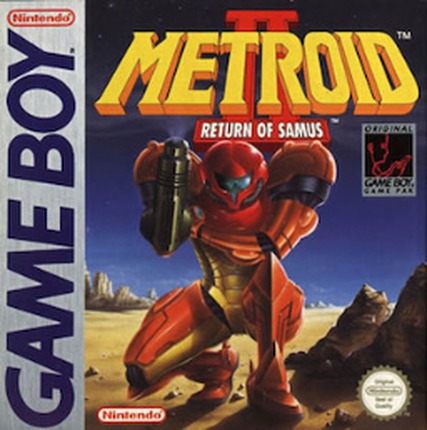
Nintendo’s Game Boy launched in North America in April 1989 with Tetris as its killer app, but its two biggest action franchises took a while to show up. Konami’s Castlevania: The Adventure arrived first, in December 1989, and critics loved it. Nintendo’s own Metroid II: Return of Samus followed almost two years later, in November 1991, to reviews that were merely respectable. Flash forward three decades, and the scorecards have essentially swapped.
Castlevania: The Adventure landed only eight months after the Game Boy itself and looked the part for 1989. Electronic Gaming Monthly’s four reviewers gave it 8, 8, 8, and 7. Total! handed it 89 percent. Zero scored it a flat 90. Several outlets called it the best Game Boy game they had played, and the guidebook How to Win at Game Boy Games gave it a straight A. Konami reported nearly $9 million in retail sales revenue on the cartridge by 1991, — real money for a four-stage launch-window handheld game.
Play those same four stages today and the reputation collapses. Modern retrospectives routinely call it one of the roughest entries in the whole Castlevania catalog. Nintendo Life gave it 3 out of 10. Retro Gamer scored it 40 percent. The complaints line up the same way every time: sluggish, floaty movement, jumps so stiff that a single mistimed hop can end a run, hit detection that misses as often as it connects, and whip upgrades that vanish the instant an enemy lands a hit. There are no sub-weapons and no stairways, none of the small touches that made the NES original feel like a real Castlevania. The one thing every era of critic still agrees on is the soundtrack — it holds up. Konami clearly agreed too — a 2010 WiiWare remake, Castlevania: The Adventure ReBirth, quietly rebuilt the whole game around fixing exactly these problems. Today happens to be the anniversary of its 3DS Virtual Console re-release, which went live on October 25, 2012.
Metroid II took the opposite path. Contemporary reviews were good, not great. Player One gave it 91 percent, but Total! only managed 66, and Famitsu’s panel split between fives and sevens. Nobody fully appreciated at the time how much of the series’ future was getting built inside that gray cartridge. This is where the Spider Ball and Spring Ball made their first appearance, where the Spazer and Plasma Beams debuted, and where Samus first gained the ability to crouch and fire straight down. It is also the game where the Metroids evolve through five increasingly dangerous forms as you hunt all 47 of them across planet SR388, a planet director Hiroji Kiyotake later admitted he named after his own Yamaha SR400 motorcycle.
The real legacy showed up two and a half years later. Super Metroid director Yoshio Sakamoto has said the ending of Metroid II affected him enough that it became the emotional starting point for designing its celebrated SNES sequel. Nintendo eventually gave the original a proper remake, 2017’s Metroid: Samus Returns for the 3DS, and retrospective critics have been kind to the Game Boy version too. IGN rated it 9 out of 10 on a later look back, and Nintendo Power ranked it 34th on its 1997 list of the 100 best games ever made. A fan remake, AM2R, got far enough along to earn a Nintendo takedown notice in 2016, which is its own strange kind of compliment.
Judged purely on 1991 review scores, Castlevania: The Adventure wins this one walking away. Judged on everything that has happened since, Metroid II is the game still shaping its series thirty-five years later, while its rival needed a full remake just to be playable again. That’s less a debate about which game reviewed better and more a reminder that a Game Boy cartridge can sit on a shelf a long time before the real verdict comes in. Both of these games also share a quieter connection for collectors: Metroid II was one of the Game Boy’s early battery-backed-save cartridges, and that same internal battery is exactly the kind of thing graders check before a Game Boy cart earns a high number. If you want the NES version of this same argument, Metroid and Castlevania already settled their own score in an earlier head-to-head, and either franchise’s graded copies are worth a look in the gallery of graded games.