

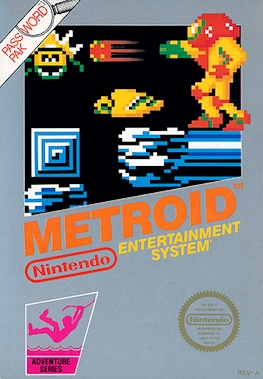
Two kids on the same block, fall of 1987. One kept a hand-drawn map of Hyrule taped inside a Trapper Keeper, marking which bushes hid staircases. The other was scribbling a 24-character password on the back of a homework sheet, terrified of losing progress before dinner was called. Different cartridges, different worlds. Somehow the same feeling: nobody was going to hold your hand, and you were going to like it anyway.
Those two games were The Legend of Zelda and Metroid, and Nintendo shipped both within months of each other. Zelda hit Japanese Famicom Disk System units on February 21, 1986. Metroid followed on the same format that August. Both crossed to America as NES cartridges in August 1987, a few weeks apart. Same publisher, same year, wildly different internal teams — Zelda came from Nintendo R&D4 under Shigeru Miyamoto and Takashi Tezuka, while Metroid was a joint effort between Gunpei Yokoi’s R&D1 and Intelligent Systems.
The engineering split says a lot about how differently Nintendo treated these two. Zelda’s NES cartridge shipped with an internal battery, one of the first console games ever to save your progress that way. Metroid’s American cartridge didn’t get that luxury. Instead it handed you a password system, a 24-character string you’d copy onto paper and pray you transcribed correctly. Two teams solving the same problem — how do you let a kid put the controller down and pick it back up a week later — with completely different budgets and priorities.
Design-wise, they diverge even harder. Miyamoto has said outright that Zelda was built as the opposite of Super Mario Bros.: a 600-plus-screen overworld you could wander in almost any order, with a skilled player theoretically able to walk straight to the final dungeon if they knew the route. Metroid went the other direction, trapping you inside a cramped, vertical planet called Zebes where progress meant backtracking through rooms you’d already cleared, now reachable with a new power-up. That backtrack-for-upgrades loop didn’t have a name yet. Decades later, once Castlevania borrowed the formula for Symphony of the Night, fans welded the two games’ names together and called the genre Metroidvania. Metroid earned top billing in its own genre name. Not a bad legacy for a launch-week cartridge.
Commercially, there’s no contest. Zelda moved roughly 6.51 million copies worldwide, including a million sold on day one in Japan alone. Metroid landed around 2.73 million, respectable but nowhere close. Critics loved Metroid anyway — Nintendo Power slotted it into the top 11 games on its consoles at the time, and AllGame handed it a full five stars decades later for graphics, sound, and control that still held up. Zelda’s reputation needs no defending; it’s routinely named among the most influential games ever made, full stop.
Here’s where it gets interesting for collectors. Zelda’s sales numbers mean loose and complete copies are everywhere, so the real value sits in condition and completeness — box, cartridge, and manual all matching and graded together. Metroid’s smaller print run works the opposite way. A complete-in-box copy is scarcer to begin with, and a clean one can command a real premium over a stack of common Zelda carts, even with the sales gap running the other direction. If you’re building a collection instead of just a nostalgia shelf, that’s the kind of detail worth knowing before you buy — the same way our grading process looks past the label and checks whether everything in the box actually belongs together.
So which one wins? Depends which kid on the block you asked. The Trapper Keeper cartographer would tell you Zelda invented freedom. The password-scribbler would tell you Metroid invented dread, and dread is scarier than any dungeon. Both are right. That’s usually how the good arguments go.