

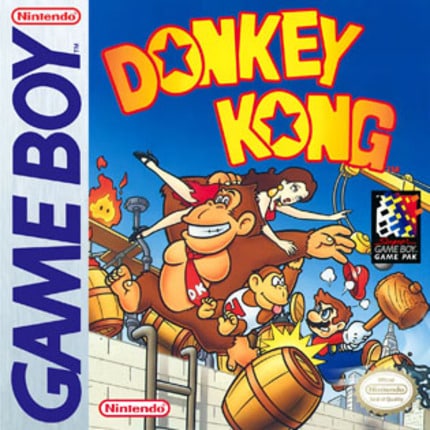
Somewhere in a bedroom in 1994, a kid slid a new Game Boy cartridge into the slot expecting four levels and a bragging right: I beat the same game as the arcade cabinet at the pizza place. They got that far, no problem. Then a fifth level showed up. Then Donkey Kong grabbed Pauline and ran off again, and the game just kept going. Ninety-seven more levels going.
That bait-and-switch is the whole story of Donkey Kong on the Game Boy. Nintendo and Pax Softnica built it. Shigeru Miyamoto produced it, and it hit Japan on June 14, 1994, with North America following that same month. On paper it reads like a straightforward port of the 1981 arcade original. In practice, it’s a different game wearing the old one’s skin, a puzzle-platformer that borrows Donkey Kong Jr.’s vine-climbing and Super Mario Bros. 2’s pick-up-and-throw mechanics, then hands Mario a moveset nobody had seen from him before: backflips, handstands, triple jumps, wire-spinning.
The structure is what made it click. Four remade arcade stages ease you in, then nine new worlds take over, each one a small puzzle box. Find the key, then get it to the locked door without eating whatever DK’s throwing from that floor. Collect three hidden items along the way and a level unlocks a bonus round. It’s dense. Ninety-seven original levels is a lot of game to hide inside a cartridge nobody expected to run past the arcade’s four screens.
There’s a reason it looked and sounded better than a typical 1994 Game Boy release, too. This was the first game built specifically around the Super Game Boy adapter, which piped Game Boy cartridges through an SNES and onto a television. Plug it in and Donkey Kong gained a colored border and a real palette, plus more than forty music tracks, a startling amount of audio for hardware that usually wheezed out three channels of beeps. Critics at the time called it the killer app for a peripheral most people had already forgotten they owned.
It sold well: roughly 3.07 million copies worldwide, and both Electronic Gaming Monthly and Video Games magazine named it Game Boy game of the year for 1994. It just had bad timing. Donkey Kong Country landed on the SNES that November, all rendered graphics and marketing budget, and swallowed the conversation whole. The handheld game that quietly rewrote the character’s moveset, including the red necktie Donkey Kong Country would borrow a few months later, became the one people forgot existed.
A couple of details are worth knowing if you’re the type who reads credits. Designer Kenta Usui built a chunk of the 97 new levels during his commute and lunch breaks, which is either an impressive work ethic or a mild horror story depending on how you feel about level design as homework. An early build also included a level editor, cut before release because the team decided it was too complicated for the kids they assumed would be playing it. That’s a feature Nintendo wouldn’t put back in a mainline Mario game for decades.
If you’re chasing a copy now, condition tends to hinge on the label and manual more than the cartridge itself. Game Boy carts are tough. A complete-in-box copy with the box art and instructions still crisp is the harder find, and it’s a reasonable entry point if you’re building out a graded Game Boy shelf next to bigger-ticket NES pieces. Check out our how it works page if you want to know what we’re actually looking for on a submission.
For a deeper library dive, our ranking of the best-selling Game Boy games runs through several titles that outsold this one, and our look at Metroid II: Return of Samus covers the other big 1994 Game Boy release that quietly reworked a Nintendo character while nobody was watching.