

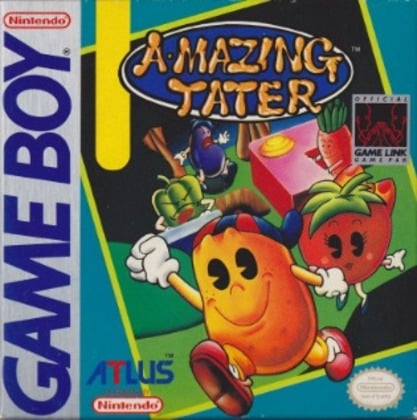
Somebody always has this story: a Game Boy cartridge turns up at a yard sale, a thrift store, the bottom of a junk drawer at grandma’s house. It looks like nothing. No familiar mascot, no recognizable box art — just a cartoon vegetable staring back at you, maybe. Then someone checks eBay and the color drains from their face. A handful of Game Boy games command four figures today, and almost none of them were considered special when they shipped. Most just printed too small a run, or found an audience too niche to notice.
That’s the pattern behind most of this list, and it’s almost the exact opposite of what drove our best-selling Game Boy games ranking. Rarity on the original Game Boy rarely comes from a game being good or bad. It comes from a publisher printing too small a run, or a release that landed after the console’s spotlight had already moved on to something newer. Here’s how ten of them stack up, working toward the one that towers over the rest.
- Jimmy Connors Tennis (Ubi Soft, 1993) — A perfectly playable tennis game buried under Ubi Soft’s limited North American print run. Loose copies still clear the $100 mark, which is a strange fate for a sports title nobody remembers being hard to find.
- Avenging Spirit (Jaleco, 1991) — Jaleco’s body-swapping arcade port barely got a push stateside. It has since become enough of a cult favorite that Retro-Bit gave it an official reprint in 2022, but an original 1991 cartridge still runs well past $100.
- Castlevania Legends (Konami, 1998) — A late-life Game Boy release that critics savaged for being short and easy, and that Konami itself later wrote out of the series’ canon. Both facts kept demand low for years. Neither one kept the price down once original copies got scarce.
- Sumo Fighter (1991) — A Japanese import-style fighter that saw a genuinely small North American release. It never had the audience to justify a big print run, and collectors have been chasing what’s left ever since.
- Toxic Crusaders (1992) — Tied to a cartoon nobody remembers fondly, based on a movie fewer people saw, and released only in North America. That narrow footprint is the whole reason a beat-’em-up nobody asked for now trades for hundreds of dollars.
- Beethoven: The Ultimate Canine Caper (1994) — A movie tie-in for a family comedy sequel, on a console whose spotlight had already shifted to Game Boy Color. Licensed movie games from this era usually get forgotten. This one got expensive instead.
- Mega Man V (Capcom, 1994) — The only Game Boy Mega Man built around brand-new Stardroid bosses instead of recycled NES fights, which makes it essential to series completionists. It has resurfaced on 3DS Virtual Console and Switch Online since, but an original cartridge in hand still isn’t cheap.
- F1 Pole Position “Black Label” (1993) — The North American variant of this racer is scarcer than the more common PAL release, and the black label design alone is enough for some sellers to double the asking price.
- Spud’s Adventure (Atlus, June 1991) — Atlus dressed a genuine action-RPG up in cartoon vegetable packaging and released it in numbers that feel almost accidental. Boxed copies now regularly clear four figures.
- Amazing Tater (Atlus, February 1992) — In Japan, this one was marketed as a follow-up to Atlus’s earlier puzzler Kwirk. American players got no such context, just a potato-themed puzzle game with a print run so small that graded, complete copies have sold for well over $2,000. It’s the single hardest original Game Boy cartridge to find complete, and the price reflects it.
Notice how little “good game” has to do with any of this. What actually drives Game Boy values is scarcity and completeness, plus how well a cartridge survived decades of getting tossed in a drawer — the same forces we broke down in a look at what population reports actually show, and the same logic behind our list of the rarest NES cartridges ever made. A loose cart and a complete-in-box copy of the same game can be separated by hundreds of dollars, and a graded, authenticated example commands more than either. If you’re holding onto something in this range — or think you might be — that’s exactly the kind of detail worth getting a second opinion on before you decide what it’s worth.