

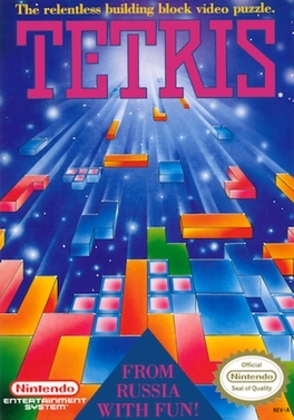
By October 1990, NES owners shopping for a puzzle game had exactly two choices, and Nintendo had made both of them.
Tetris landed on the NES first, in November 1989, after Nintendo’s own port shoved Atari Games’ competing Tengen cartridge off store shelves entirely. Dr. Mario followed less than a year later, and it looked at first glance like a quick cash-in: slap a mustache on the falling-block formula everyone already wanted and ship it before the holidays. Except Nintendo R&D1 built both games, and Gunpei Yokoi, the engineer who would go on to invent the Game Boy, personally produced Dr. Mario. This was not one studio chasing another studio’s hit. It was Nintendo competing against itself, on purpose, with its own in-house teams.
The sales gap tells you who won that fight on paper. Nintendo’s NES Tetris sold somewhere around 8 million copies, making it one of the best-selling games the console ever had. Dr. Mario still moved roughly 4.85 million copies on NES alone, respectable by any measure, then nearly matched that number again on Game Boy. Tetris won the shelf. It did not necessarily win the better game.
That is where this debate actually gets interesting. NES Tetris shipped with a two-player versus mode sitting dead in its code. Flip it on and nothing happens, because the feature that would have dumped garbage rows onto an opponent’s board never got finished, likely cut to push players toward the Game Boy’s new Link Cable instead. Dr. Mario shipped the real thing: separate bottles for each player, with a big enough chain reaction actually burying your opponent in capsules, best of three games deciding the match. On a console where split-screen competition barely existed outside of sports titles, finishing that feature and shipping it was not a small thing.
Critics noticed the gap too, even where sales did not show it. Reviewers treated Nintendo’s own Tetris port as the lesser option almost from day one, with contemporary coverage openly preferring the Atari version it had just replaced. Dr. Mario fared better with the people who actually sat down and played it start to finish. Famitsu gave the NES version scores as high as 9 out of 10, and it still sits around 51st on IGN’s all-time NES rankings decades later. Give some credit to Hirokazu Tanaka’s soundtrack too. It is the kind of simple chiptune hook that outlived the cartridge it shipped on.
If you are deciding which one is worth chasing for a graded shelf, the honest answer is both, for different reasons. Tetris carries the bigger name and the bigger production run, which keeps high-grade sealed copies in steady demand among collectors who want the famous title. Dr. Mario’s smaller footprint and distinct mustached box art make genuinely clean copies a little scarcer in practice, even without Tetris’s name recognition working in its favor. Check our graded gallery to see how NES puzzle games have actually been grading lately before deciding which one earns a spot on the shelf.