

There was a specific feeling that came with the Konami logo flashing on a rental cartridge’s title screen in the late 1980s. It wasn’t a promise the game would be easy. Half the time it meant the opposite. But it was close to a guarantee that the game would be good, tight, and worth the two-night rental fee. Nintendo built the console. Konami built a good chunk of the reason anyone kept it plugged in past 1987. Narrowing the company’s NES library down to ten games meant cutting plenty of worthy ones, so this list leans on sales, critical reception, and which cartridges still get passed around at collector meetups decades later.
10. Double Dribble (1987). Konami’s basketball game is remembered as much for its exploits as its dunks. Line up a three-point shot from the right spot near the corner and it sank almost automatically, out of bounds or not. That quirk didn’t stop the animated slam-dunk cutscenes from becoming the real selling point, the first time an NES sports game made scoring feel like an event instead of a stat line.
9. Rush’n Attack (1987). Renamed from the arcade original’s “Green Beret” as a play on “Russian attack,” this Cold War platformer armed its hero with a knife and dropped him behind enemy lines to blow up a secret weapons lab. IGN later ranked it 99th on its top 100 NES games list. The two-player mode and unforgiving difficulty kept it in constant rotation at video stores that had nothing left in stock but the weird stuff.
8. Teenage Mutant Ninja Turtles II: The Arcade Game (1990). Released a year after the original’s infamous dam-defusing level turned half its players against it, the sequel dropped the overworld map entirely and just let four turtles brawl through arcade-style stages. Reviewers treated it like an apology, and it’s the TMNT cartridge most people actually remember fondly.
7. Life Force (1988). A reworking of the arcade game Salamander, it swapped Gradius’s clean mechanical sci-fi for organic, alien-flesh-covered corridors that felt genuinely unsettling on a console still mostly selling plumbers and princesses. Built for two players trading off through the same nightmare biology, it earned a following distinct from its more famous sibling.
6. Gradius (1986). The side-scrolling shooter that made memorization a genre unto itself, and gave the entire industry a cheat code so famous it outlived the game itself, long enough to spawn a whole family of legendary “Konami Code” imitators across dozens of other publishers’ titles.
5. Teenage Mutant Ninja Turtles (1989). One of the best-selling licensed games on the console despite — or maybe partly because of — a dam level that ended more childhoods’ worth of patience than almost anything else in the NES library. We covered the game even its own co-creator couldn’t finish in its own spotlight.
4. Metal Gear (1988). The NES version isn’t really the Metal Gear Hideo Kojima made. It’s a rebuilt port that changed enough of the original MSX2 game that Kojima himself has distanced from it publicly, which is exactly the story we told in full a couple of weeks back. Stealth-based, sneaking-focused gameplay was still a genuine novelty on a home console in 1988, warts and all.
3. Castlevania (1986). Simon Belmont’s stiff jump and whip-first combat turned every staircase into a small negotiation, and the game moved roughly a million copies in the US while setting the visual template every vampire hunter since has borrowed from. Our full writeup covers why it played more like a horror movie than a platformer.
2. Castlevania III: Dracula’s Curse (1990). Branching paths, three recruitable companions, and multiple endings made this the rare sequel that topped its predecessors rather than coasting on them. IGN ranked it 5th on its list of the best NES games ever made, and GamesRadar called it the eighth-best outright — not just the best Castlevania, the best NES game, period, according to two outlets that don’t usually agree on much.
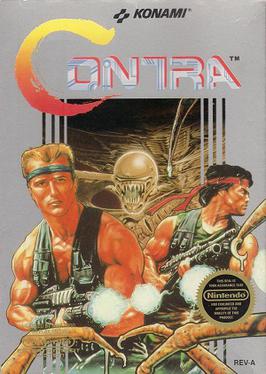
1. Contra (1988). Two soldiers, unlimited enemies, and a code so well known it became a piece of general pop-culture trivia independent of the game itself. Sales, difficulty, and cultural reach all point the same direction. We’ve already told the story of the code everyone knew before they beat the game, and it remains the single Konami cartridge most likely to start an argument about which entry deserves the top spot on a list exactly like this one.
A few of these show up in our gallery of graded copies for good reason. Konami’s print runs varied wildly by title and year, and a complete, boxed copy of something like Life Force or Rush’n Attack can be a lot harder to track down clean than the household names at the top of this list. Worth a proper grade before you assume you know what a “good” copy of any of these is actually worth.