

Two Marios landed on the NES within eighteen months of each other, and they barely feel like siblings. One hands you a dream sequence where you fight bosses by yanking vegetables out of the ground. The other hands you a raccoon tail, a world map, and a level of polish that took Nintendo more than two years to get right. Ask a room full of collectors which one actually earned the title “Super Mario Bros. 2,” and you’ll start an argument that’s been running since 1990.
Super Mario Bros. 2 wasn’t originally a Mario game at all. The true Japanese sequel, a brutally hard reskin of the original released on the Famicom Disk System in 1986, scared Nintendo of America off entirely. Too punishing for a market still shaky from the 1983 crash. So Nintendo grabbed Yume Kōjō: Doki Doki Panic, a carnival-themed game built for a Fuji TV festival, swapped the characters for Mario, Luigi, Toad, and Princess Peach, and shipped it in North America on October 9, 1988. No stomping enemies this time. You pull them out of the ground and throw them, pick whichever character suits your playstyle, and duck into Subspace doors that didn’t exist in any other Mario game before or since. It worked. The game topped US sales charts for fourteen straight months and eventually moved 7.46 million copies worldwide, the fourth best-selling NES title ever made.
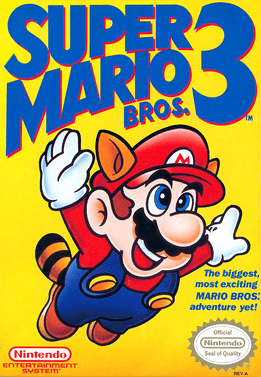
Super Mario Bros. 3 took the harder road. Shigeru Miyamoto and Takashi Tezuka started building it right after SMB2 wrapped, and it took over two years and somewhere between $800,000 and $1.3 million to finish, a staggering budget for an NES cartridge. Miyamoto pitched the whole thing like a stage play, curtain opening on level one, theatrical transitions between worlds. Japan got it in October 1988. America had to wait until February 12, 1990, and Nintendo used the delay as marketing, planting the game inside the movie The Wizard months before anyone could buy a copy. It paid off. Two hundred fifty thousand copies sold in the first two days alone, and it went on to move more than 17 million units worldwide, the third best-selling NES game in history. Computer and Video Games gave it a 98%, calling it “the Mona Lisa of gaming,” and Nintendo Power eventually ranked it the best NES game ever made.
So which one deserves the crown? SMB2 gets credit for doing something genuinely different when the franchise easily could have coasted on more of the same, and its character-swap mechanic quietly previewed ideas Nintendo would reuse for decades. But SMB3 is the one that shows up on “greatest games of all time” lists, the one that introduced the overworld map and the Tanooki Suit and taught an entire generation what a Mario game was supposed to feel like. It’s not really a fair fight. SMB2 is the weird, beloved cousin. SMB3 is the one that set the standard everything after it got measured against.
That gap shows up in the grading market too. High-grade sealed copies of Super Mario Bros. 3 routinely command more attention from collectors than SMB2, partly on nostalgia and partly because it’s the one more casual buyers recognize on sight. Condition matters enormously either way. A cartridge that spent thirty years in a damp basement grades nothing like one that sat in a climate-controlled closet, and the box and manual usually take the worst of the damage long before the cart itself does. If you’ve got either one sitting in a drawer, it’s worth checking out our gallery of graded games to see what condition actually looks like at each grade tier before you assume yours is mint.
Pick a side if you want. Just don’t call SMB2 the lesser game around anyone who grew up throwing turnips at Birdo.